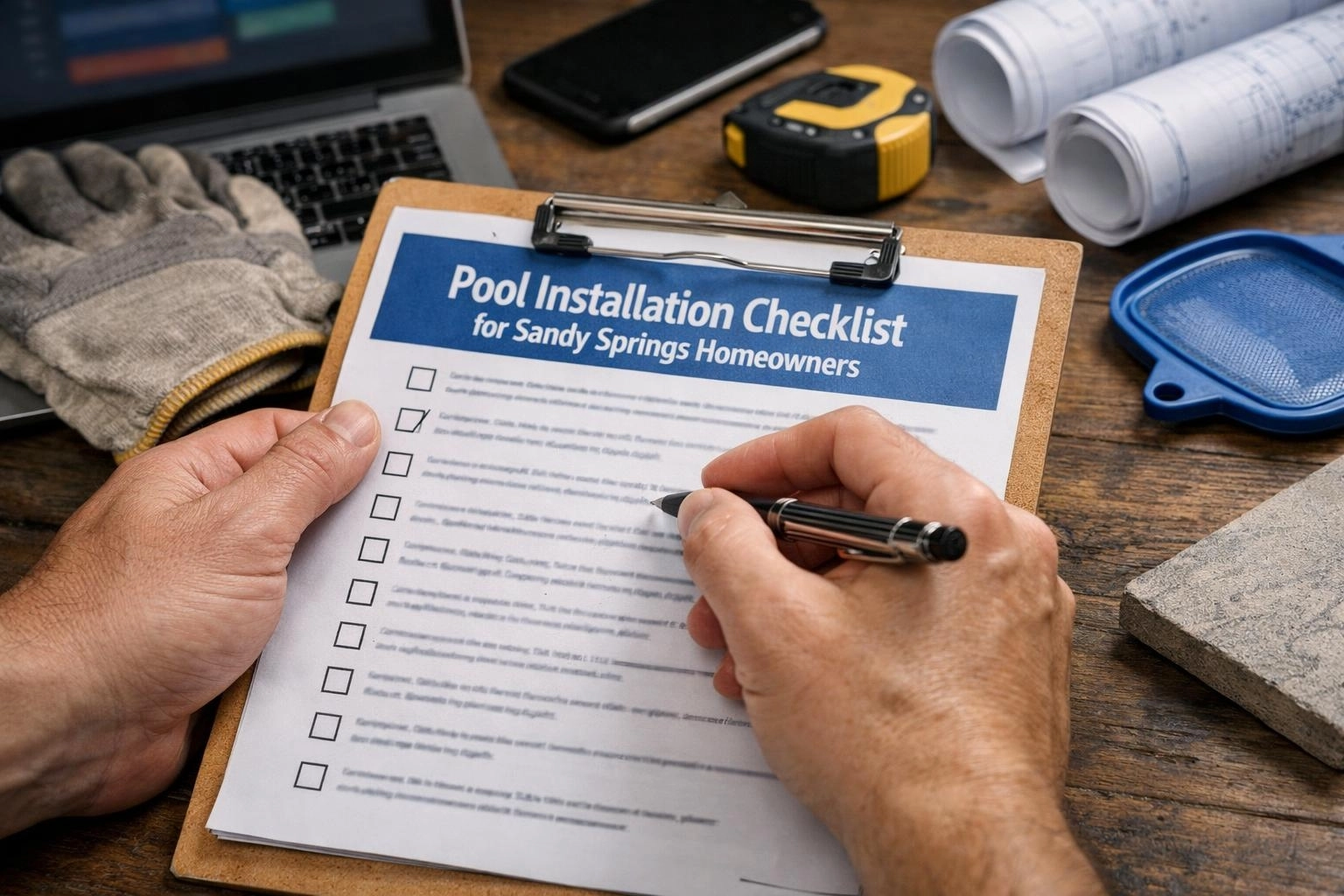
Pool Installation Checklist for Sandy Springs Homeowners
A pool installation checklist should guide Sandy Springs homeowners through planning, budgeting, permits, site checks, utility marking, design approval, excavation, inspections, equipment setup, and final startup. In Sandy Springs, the best checklist also plans for clay soil, drainage, backyard access, HOA rules, and seasonal timing. That helps the project stay on track and avoids costly rework.
A pool installation checklist helps Sandy Springs homeowners move from permit to final inspection with fewer surprises. It works best when it covers budget, site survey details, property lines, setbacks, and HOA approval before digging starts. It also keeps the pool builder, designer, and homeowner aligned on scope, timing, and choices.
In metro Atlanta, a good pool project checklist should cover local review steps, utility locate calls, and a clear drainage plan. Sandy Springs lots often have mature trees, narrow side yards, and neighborhood visibility rules, so the pre-construction checklist should confirm where the pool, fence, and equipment pad can go. Early planning helps avoid redesigns, delays, and permit problems.
What Should Be on a Pool Installation Checklist Before Work Starts?
Pool installation checklist before work starts should confirm your budget, pool type, lot conditions, utility locations, permit needs, HOA rules, and contractor scope. For Sandy Springs homeowners, this prep step cuts delays, prevents design conflicts, and makes sure the project fits the yard, access path, and local review process.
For a Sandy Springs, GA project, this stage should also include a look at local weather patterns, since heavy Georgia rain and humid summers can affect grading and erosion control. A strong home improvement checklist treats the pool as a full construction planning guide, not just a design wish list.
What Do You Need to Verify During the Design and Permit Stage?
During design and permit planning, verify the pool permit path, the final pool design, and every rule that could affect placement or appearance. The goal is to make sure the plans match the lot, the review process, and the builder’s construction timeline before excavation begins.
- Confirm that the pool permit application matches the current pool design and equipment layout.
- Check utility easements so the pool, fence, and equipment don't cross restricted areas.
- Measure property setbacks from all sides of the lot and compare them with the proposed footprint.
- Review the drainage plan so grading, downspouts, and runoff control support the finished yard.
- Ask whether HOA approval is needed for visible structures, fence style, coping, or equipment screening.
At this point, the installer should also confirm electrical bonding, plumbing rough-in routes, and where the equipment pad will sit. Clear paperwork and a clean permit set help reduce inspection delays later and keep the project moving in the right order.
Which Steps Belong in the Pool Installation Process?
Pool installation process steps should follow a clear sequence: mark and dig the site, verify grades and drainage, install plumbing and electrical, set the structure, complete shell work, add decking and equipment, then test all systems. Sandy Springs projects also need careful access planning and soil handling so excavation and backfill stay stable.
On typical residential jobs, the sequence is less about speed and more about order. If the site has clay soil, poor access, or steep grading, the builder may need extra time for stabilization, compaction, and cleanup. A reliable swimming pool installation checklist keeps each trade moving in sync.
What Red Flags Should Sandy Springs Homeowners Watch For?
Watch for warning signs that point to avoidable rework, slow approvals, or a weak build plan. If a pool builder isn't upfront about scope, drainage, or scheduling, the project can drift fast.
- Drainage issues are ignored, even though heavy rain can expose poor grading and erosion control.
- An unlicensed contractor offers to start without clear permit support or documented insurance.
- Change orders appear often because the plan was not measured against property lines or setbacks.
- Inspection delays stack up because the installer did not leave the site ready for each required check.
How Do You Know the Pool Is Ready for Final Inspection and Startup?
Pool final inspection and startup should confirm that the shell, coping, decking, drainage, fencing, equipment, and safety features meet the approved plan. In Sandy Springs, the final check should also verify water circulation, electrical safety, and clear access for inspectors so the pool can open without rework.
| Final check item | What should be true | Why it matters |
|---|---|---|
| Final inspection | Plans, safety features, and construction details match the approved permit set. | This confirms the pool is code-ready and closeout can move forward. |
| Equipment testing | Pump, filter system, controls, and circulation operate without leaks or faults. | Proper testing helps catch issues before the pool is filled for regular use. |
| Water chemistry | Startup water is balanced within typical safe ranges for the finish and system. | Balanced water protects surfaces and supports clean, clear startup. |
| Access and visibility | Inspectors can reach the site, equipment pad, and safety components easily. | Clear access helps avoid rescheduling and last-minute corrections. |
Before startup, the builder should confirm the pump, filter, and bonding are complete, then verify circulation and any required alarm or fence details. A careful closeout also checks for settling around backfill, splash-out grading, and any small repairs needed after filling.
What Maintenance Items Should Be Checked After Installation?
Pool post-installation checks should include filter cleaning, pump performance, water balance, leak monitoring, and seasonal service planning. Sandy Springs homeowners benefit from a startup routine that gets the system ready for humid summers, leaf drop, and changing temperatures so the new pool stays clean and efficient.
In neighborhoods with heavy tree cover, leaf cleanup may matter as much as chemical balance. A simple pool build checklist after installation should remind the homeowner to check skimmers, baskets, and circulation after storms so the system keeps running well.
Why Choose a Local Sandy Springs Pool Builder for This Checklist?
A local pool builder can coordinate permits, site conditions, scheduling, and subcontractors with the realities of metro Atlanta neighborhoods. In Sandy Springs, GA, that local experience helps a swimming pool contractor handle access limits, drainage surprises, and inspection timing while keeping the checklist tied to how residential projects are built here.
Local project coordination matters because mature lots, tight staging areas, and neighborhood expectations can affect almost every phase. A nearby installer knows how to work with the city process, HOA approval concerns, and weather swings, which makes the construction timeline easier to manage from the first site meeting through startup.
Frequently Asked Questions
Related Resources
Custom Pool Design and Installation
Everything About ItPool Builder vs Custom Pool Builder: What’s the Difference?
pool builder vs custom pool builder
Everything About ItInground Pool Builder: Everything You Need to Know
inground pool builder
What It CostsPool building cost in Sandy Springs, GA
pool building cost