Pool Builder vs Custom Pool Builder in Sandy Springs, GA: What’s the Difference?
A pool builder installs standard pool designs, while a custom pool builder designs and builds a pool around your yard, goals, and site conditions. In Sandy Springs, GA, the right choice depends on lot slope, access, drainage, tree coverage, and how much design flexibility you want. If you want faster installation and simpler pricing, choose a standard pool builder. If you want a one-of-a-kind backyard pool tailored to your property, choose a custom pool builder.
Quick Answers: Which Type of Builder Fits Your Project?
What Is the Difference Between a Pool Builder and a Custom Pool Builder?
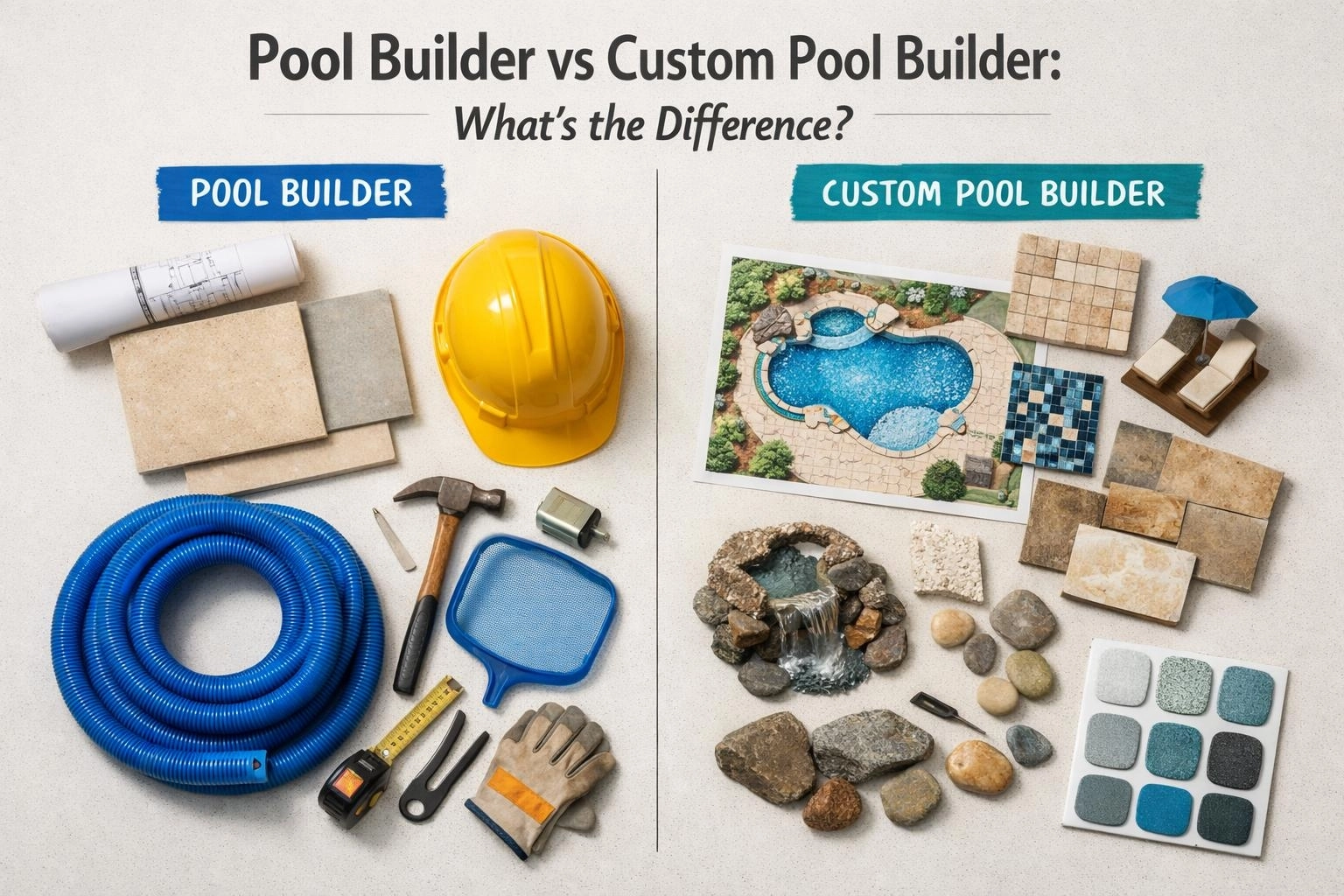
Pool builder and custom pool builder differ by design flexibility, construction scope, and site adaptation. A pool builder usually works from standard plans and repeatable build methods. A custom pool builder creates a pool for your property, layout, and features. The custom option takes more planning, but it gives you a more tailored result.
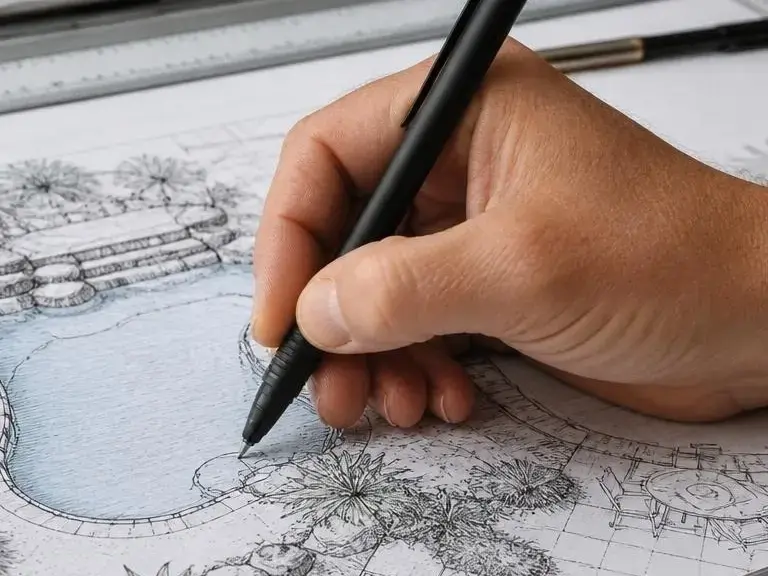
A standard swimming pool builder often offers a set menu of shapes, sizes, and finishes. That works well for many homes and keeps pool installation more efficient. A custom pool builder works more like a residential pool designer and outdoor living contractor, coordinating pool design, hardscaping, landscaping, and sometimes backyard renovation details so the whole space fits together.
The difference also shows up in the scope of work. A custom build may involve excavation changes, coping choices, permit coordination, and site grading updates based on the property. A simpler pool contractor can still do quality work, but the process is less focused on adjusting every detail to the lot.
How Standard Pool Builds and Custom Pool Builds Compare?
Standard pool builds usually follow a set catalog of shapes, sizes, and features, while custom pool builds expand the scope for unique layouts and property-specific solutions. The more your yard needs adjustment, the more a custom builder matters. That difference shows up in permitting, materials, and how much of the backyard plan is built around the pool.
| Category | Standard Pool Build | Custom Pool Build |
|---|---|---|
| Scope of work | Follows repeatable plans with fewer changes during pool installation. | Includes tailored engineering, design revisions, and more coordination with the whole site. |
| Permit process | Usually more streamlined when the design is standard and the lot is simple. | Often needs more permit coordination because the layout, grading, or drainage plan is more specific. |
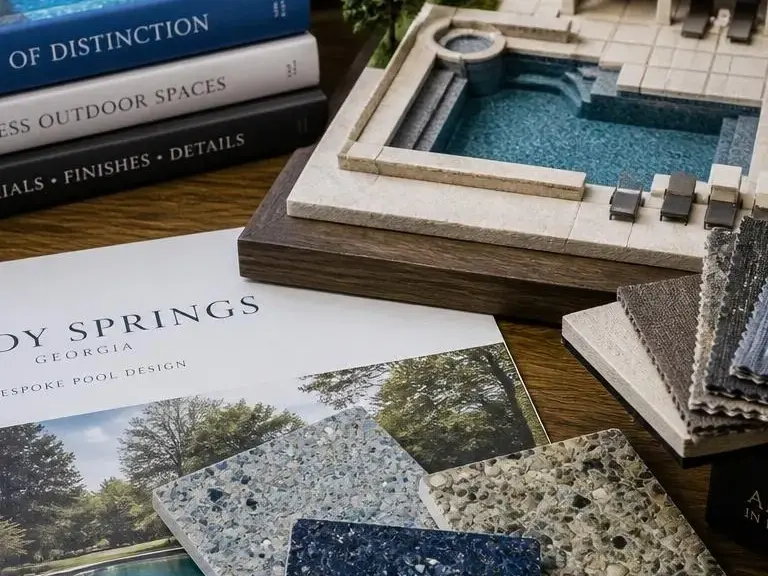
| Materials | Common finishes and standard options keep choices limited. | Broader material selection can include premium coping, tile, and finish combinations. |
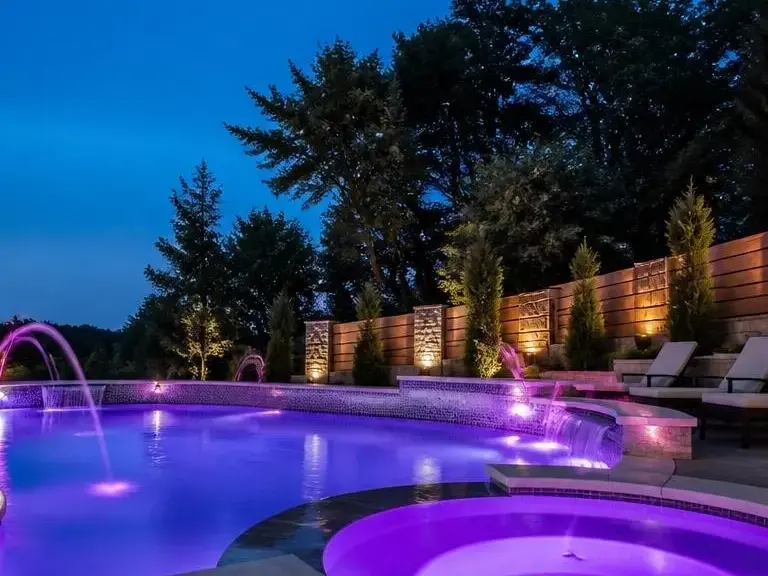
| Features | Basic entries, simple decks, and standard add-ons are more common. | Can include integrated spa, tanning ledge, custom hardscaping, and other outdoor living details. |
Design Options and Layout Choices
Pool design choices are wider with a custom builder because the layout can follow your backyard shape, views, and traffic flow. A standard build may use a familiar rectangle or freeform shell. Custom work can bend around patio lines, retaining wall placements, or existing landscaping. That matters when the pool needs to feel connected to the rest of the yard.
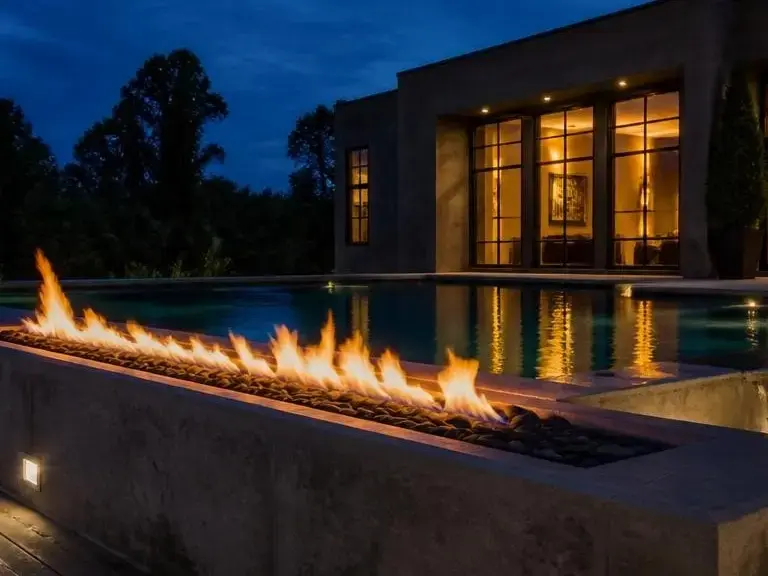
Hardscaping also changes the experience. A well-planned deck, coping edge, and nearby patio can make the water feature look planned, not added later. A home with a small or awkward lot may benefit from a custom inground pool builder who can fit the pool into the space without wasting usable yard area.
Construction Planning, Timeline, and Coordination
Construction planning is more involved for custom projects because excavation, engineering, and trade coordination must be aligned with the site. A standard build tends to move in a more fixed order. A custom pool can require more back-and-forth among the pool contractor, grading crew, utility teams, and finish installers so the work stays on track.
That extra coordination can help reduce rework later. When the plan is adjusted early, the builder can account for drainage, equipment access, and the timing of landscaping or patio work. In practice, that means a better fit between the pool and the rest of the backyard renovation.
When Does Sandy Springs, GA Need a Custom Pool Builder?
A custom pool builder is the better choice in Sandy Springs when the lot has a slope, tight access, mature trees, drainage challenges, or a backyard that needs a pool designed around existing structures. Those conditions make a one-size-fits-all pool less efficient and often less attractive, so custom planning protects both function and appearance.
Sandy Springs, GA backyard conditions often include uneven terrain, tree cover, and older lots that were not shaped for modern pool installation. That is where site grading becomes important. If the property needs leveling, retaining wall support, or drainage solutions, a custom pool contractor can design the build around those realities instead of forcing the yard to fit a preset shape.
Tree removal can also affect the plan. Mature trees can limit excavation paths, shade the pool more than expected, or interfere with plumbing and deck layout. North Atlanta weather patterns bring a long swim season, so shade planning, durable finishes, and smart material choices matter for year-round usability. In neighborhoods with strong design sensitivity or HOA-style expectations, a custom layout can better match the home and landscape.
A thoughtful builder will also look at permit coordination early, especially if the project touches setback rules, utility routes, or drainage management. On properties with uneven terrain, poor grading around a pool can create runoff issues, so the site plan has to work before the first dig. This is where a seasoned swimming pool contractor adds real value.
Which Builder Type Is Better for Budget, Speed, and Long-Term Value?
Pool builder projects are usually faster and simpler to budget, while custom pool builder projects usually cost more and take longer but can deliver stronger long-term satisfaction. Value depends on fit, not just price. The right choice is the one that matches your yard, your plans for outdoor living, and your future resale goals.
| Factor | Standard Pool Build | Custom Pool Build |
|---|---|---|
| Upfront cost | Typically lower because the design is standardized and fewer choices are involved. | Typically higher because design, engineering, and finish selections are more specific. |
| Project timeline | Usually shorter when excavation and permitting are straightforward. | Usually longer due to planning, revisions, and site-specific coordination. |
| Resale value | Can add appeal if the pool is simple, clean, and well maintained. | Can add stronger appeal when the design matches the home and landscape well. |
| Maintenance | Often easier to service because the features are more familiar. | May need more attention if the build includes premium features, water elements, or custom systems. |
For many homeowners, the best value comes from matching the project to the property instead of chasing the lowest price. A simple shape can be a smart buy on a clean, open lot, But if the property has drainage concerns, limited access, or a complicated layout, a custom plan may save money over time by reducing site problems and making the pool easier to enjoy.
Questions Homeowners Ask Before Choosing a Builder
Homeowners should ask what the builder handles, because design, permitting, excavation, utilities, finishes, and final cleanup separate a basic installer from a true custom pool builder. In Sandy Springs, it also helps to ask about drainage, access, HOA coordination, and how the plan handles local site conditions. Good answers show whether the pool contractor is thinking about the full project, not just the shell.
These questions help you compare a standard pool installer with a custom inground pool builder in a practical way. They also show whether the team is thinking like a home improvement contractor and an outdoor living contractor, not just a crew that digs a hole and pours concrete. For homeowners planning a major project, that difference matters.
Frequently Asked Questions
Basics
A pool builder usually installs standard designs, while a custom pool builder creates a pool around your yard, style, and site conditions. The custom approach gives you more design flexibility and better adaptation to your property.
Cost and Timeline
Usually yes, because custom work involves more planning, engineering, and finish choices. The added cost can make sense when the design solves slope, drainage, access, or outdoor living goals that a standard layout cannot handle well.
Local and Design Fit
Often yes, because a sloped yard usually needs site grading, drainage planning, and sometimes retaining walls. A custom approach lets the builder shape the pool to the land instead of forcing the land to fit a standard plan.
Related Resources
Pool Installation Checklist for Sandy Springs Homeowners
pool installation checklist
What's RequiredPool Construction Preparation Checklist
pool construction checklist
What It CostsPool building cost in Sandy Springs, GA
pool building cost
What It CostsHow much does a custom pool cost?
how much does it cost to build a custom pool