How Much Does a Custom Pool Cost in Sandy Springs, GA?
A custom pool in Sandy Springs, GA usually costs more than a prefab pool. Design, excavation, materials, and site conditions all add to the price. For most homeowners, the cost depends on pool size, shape, finishes, and features like spas or infinity edges. Local permit and installation factors matter too. A basic custom pool starts lower, while luxury and infinity pools can raise the budget fast. The best way to estimate your project is to compare tiers and get a site-specific quote from a custom pool builder.
How Much Does It Cost to Build a Custom Pool in Sandy Springs, GA?
Custom pool build cost in Sandy Springs, GA depends on size, excavation, finishes, and features. Most projects fall into a broad range, and the price rises quickly as customization grows. Homeowners should expect changes based on site access, soil conditions, and upgrades like spas, tanning ledges, or water features.
A custom pool cost quote usually starts with a budget estimate based on square footage. Then it changes after a site visit confirms grading, drainage, and access. A custom pool builder will also look at the pool shell type, the pool pump, the pool decking, and waterline tile choices. Those materials and finishes can turn a simple backyard project into a full outdoor living upgrade.
In this area, lots with slope and tree cover can raise excavation cost because crews may need extra grading or a retaining wall. Sandy Springs homeowners also need to plan for permits, engineering, and inspections. These steps can affect both the schedule and the total pool installation cost. Atlanta-area soil and drainage conditions sometimes add hidden work that a flat lot would not need.
For a gunite pool or other in-ground pool, the final number depends on design complexity as much as size. A straightforward turnkey installation may stay closer to the lower end, But custom pool design with an infinity-edge pool, spa, or heavy landscaping can move into the luxury pools range. A site visit is the most reliable starting point because local conditions can change the budget quickly.
What Are the Typical Custom Pool Pricing Tiers?
Custom pool pricing usually breaks into basic, standard, and premium tiers. Each tier reflects larger footprints, better finishes, and more complex construction. Basic pools focus on core function, standard pools add upgraded materials and features, and premium pools include high-end design elements, automation, and luxury details that push the budget higher.
| Tier | Typical price range | What it usually includes |
|---|---|---|
| Basic pool | Lower entry range for a custom build | Simple shape, standard pool shell, practical pool decking, and modest finishes |
| Standard pool | Mid-range for most custom projects | Better materials, upgraded waterline tile, added landscaping, and a few feature upgrades |
| Premium pool | Higher range for complex builds | Luxury pools, automation, spa integration, special lighting, and more detailed custom pool design |
Basic projects are best for homeowners who want a clean pool build price without many extras. Standard projects usually include stronger material choices and a more tailored layout. Premium work is where infinity pools, advanced water features, and custom hardscape details matter most. That’s especially true when the goal is a true showpiece.
The widest price jumps usually come from craftsmanship, not just size. A premium build may need more engineering, a larger retaining wall, or extra coordination for decking and landscaping. That is why pool installation cost can change even when two projects have similar footprints.
Which Custom Pool Options Change the Price the Most?
Custom pool options change the price most when they add structural work, specialty labor, or high-end finishes. Infinity pools, pool spa add-ons, water features, and automation can each raise the budget. They need more design work and more time on site.
- Infinity pools often need extra engineering, careful grading, and more complex construction to create the edge effect.
- A pool spa adds plumbing, equipment, and finish work, which increases both materials and labor.
- Water features such as sheer descents, fountains, or spillways add mechanical parts and design details.
- Automation can simplify use later, but it raises the initial investment for controls, wiring, and equipment.
- Upscale materials and finishes like premium tile, stone decking, and specialty plaster can move a project into luxury pools territory.
Other cost drivers include the pool shell shape, the amount of excavation, and how much landscaping must be restored after construction. A simple rectangle is easier to build than a freeform design with curves, ledges, and multiple elevations. If the site already has strong drainage and easy access, these upgrades are easier to manage.
How Does a Custom Pool Cost Calculator Estimate Your Project?
A custom pool cost calculator estimates price by combining pool size, shape, materials, and feature selections with installation variables like excavation difficulty and access. It helps you get a starting budget, but it can’t replace a site visit. Local ground conditions, elevation changes, and design complexity can change the final number.
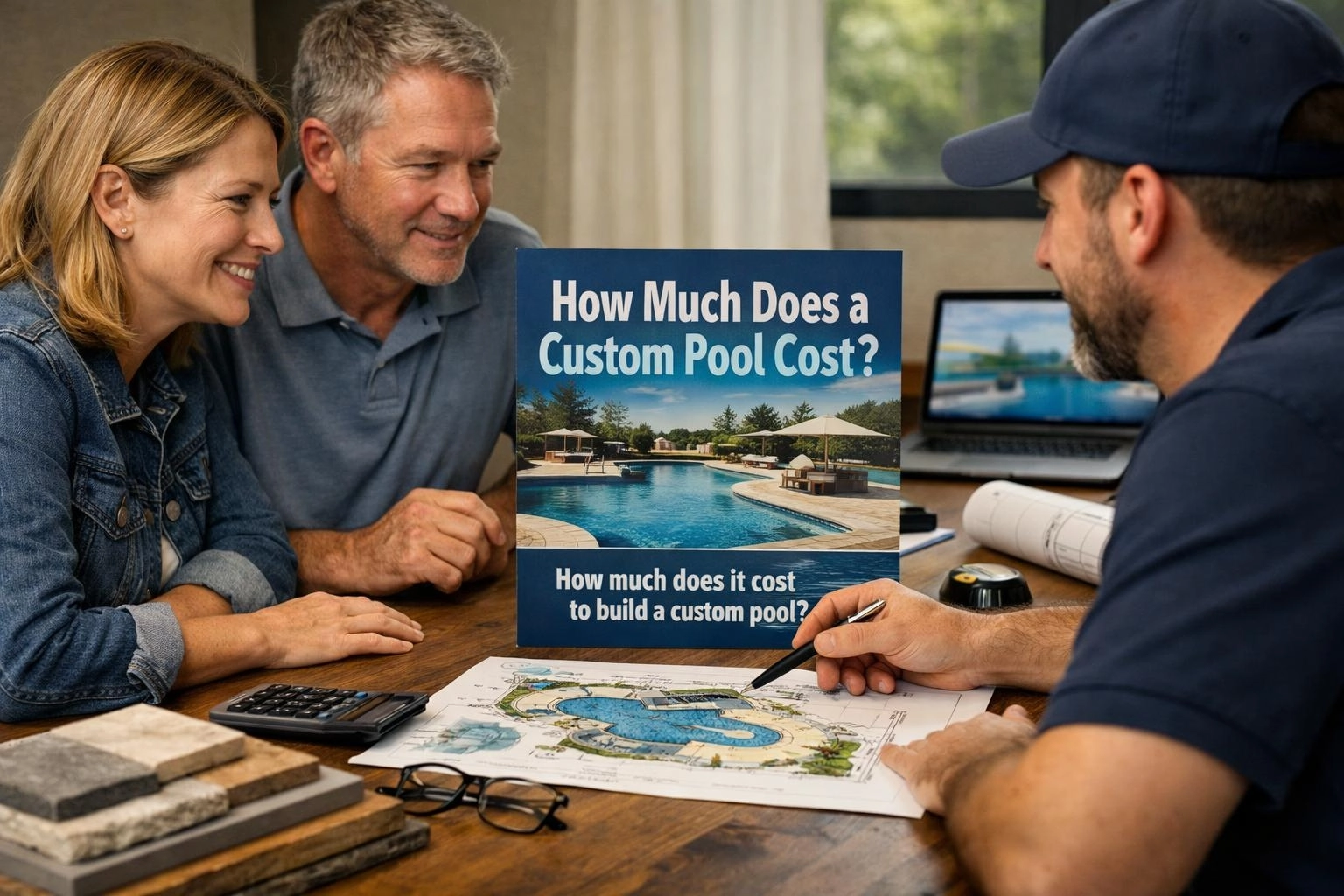
Use the calculator as a planning tool, not a final bid. It can show how one change, like adding automation or switching finishes, affects the total. Still, only a site visit can confirm excavation cost, engineering needs, and any drainage work your lot may need.
What Drives Custom Pool Build Cost Up or Down?
Custom pool build cost rises when the site needs difficult excavation, structural engineering, retaining walls, or premium finishes. It falls when the yard is flat, easy to reach, and simple to build on. In Sandy Springs, lot conditions and design complexity often matter as much as the pool itself.
Excavation is one of the biggest variables because rocky ground, narrow access, or heavy tree cover can slow the crew and raise labor. If the yard slopes, grading may need extra work to create a level build zone. In some cases, a retaining wall is needed to support the pool area or manage a change in elevation, which adds engineering and construction cost.
Permits can also affect the timeline and budget. Sandy Springs permit steps often require inspections, and that coordination may lengthen the project if the design includes a spa, a complex deck layout, or electrical and plumbing changes. A smart custom pool builder will plan for this early so the schedule does not slip.
Drainage is another important factor in Atlanta-area soil and rainfall patterns. If water moves poorly across the property, the pool area may need extra drainage, revised grading, or landscape changes to protect the shell and hardscape. Landscaping itself can shift the total too, especially with restored trees, planted borders, or upgraded outdoor living spaces around the pool.
Material choices matter as well. A basic finish keeps costs more controlled, while premium tile, stone, and specialty decking raise the price. Engineering, access, and project scope all work together, so two similar-sized pools can end up with very different quotes. That is why site-specific pricing is more accurate than any generic estimate.
How Can You Lower Custom Pool Cost Without Cutting Quality?
You can lower custom pool cost by simplifying the shape, choosing durable mid-range finishes, phasing nonessential features, and planning the project before construction starts. Smart value engineering keeps the pool attractive and functional while reducing unnecessary complexity, change orders, and labor-heavy upgrades that drive costs up.
A strong plan also reduces the risk of change order surprises once work begins. When the pool shell, pool decking, and equipment choices are settled early, the build stays smoother and easier to manage. That usually protects both the budget and the final look.
What Should Sandy Springs Homeowners Know Before Pricing a Custom Pool?
Sandy Springs homeowners should account for local permitting, drainage planning, tree removal, and access issues before pricing a custom pool. These local factors can affect excavation, scheduling, and build complexity, so a quote based only on pool size can miss real project costs that appear once the site is reviewed.
Tree removal can become a major line item when mature trees block the build area or limit equipment access. On some lots, preserving trees is possible, but it may require a different layout or more careful grading. Property access matters too, since narrow driveways or tight side yards can make it harder to move materials, formwork, and equipment into place.
Drainage deserves special attention because sloped yards and Atlanta-area soil conditions can send water toward the pool area if the site is not planned correctly. That may lead to extra engineering, revised grading, or added landscape work to control runoff. A local builder familiar with these conditions can help you avoid surprise costs and schedule delays.
It is also wise to confirm the permit path before you finalize the design. The Sandy Springs permit process may involve inspections and coordination that affect sequencing for excavation, plumbing, electrical, and finishing work. When you price the project with these items in mind, your estimate is more realistic and your build is more likely to stay on track.
Frequently Asked Questions
Related Resources
Pool Construction Preparation Checklist
pool construction checklist
What Goes With ItCustom Pool Design and Installation
What Goes With ItLuxury Infinity Pools
luxury infinity pool
Everything About ItPool Builder vs Custom Pool Builder: What’s the Difference?
pool builder vs custom pool builder