Pool Opening Checklist for Spring and Summer in Sandy Springs
A pool opening checklist helps Sandy Springs homeowners inspect, clean, and balance their pool before spring and summer use. Start by removing the cover, clearing debris, and checking pumps, filters, skimmers, and returns. Then refill to the proper level and test the water chemistry. Next, prime the equipment, shock the water if needed, and check circulation and safety features before swimming starts.
Pool opening checklist helps homeowners handle spring and summer pool startup in Sandy Springs, GA with a clear plan. It also supports better pool maintenance, leak detection, and algae prevention before warm weather raises chlorine demand. For a quick start, use the pool opening guide below and check the system before you swim.
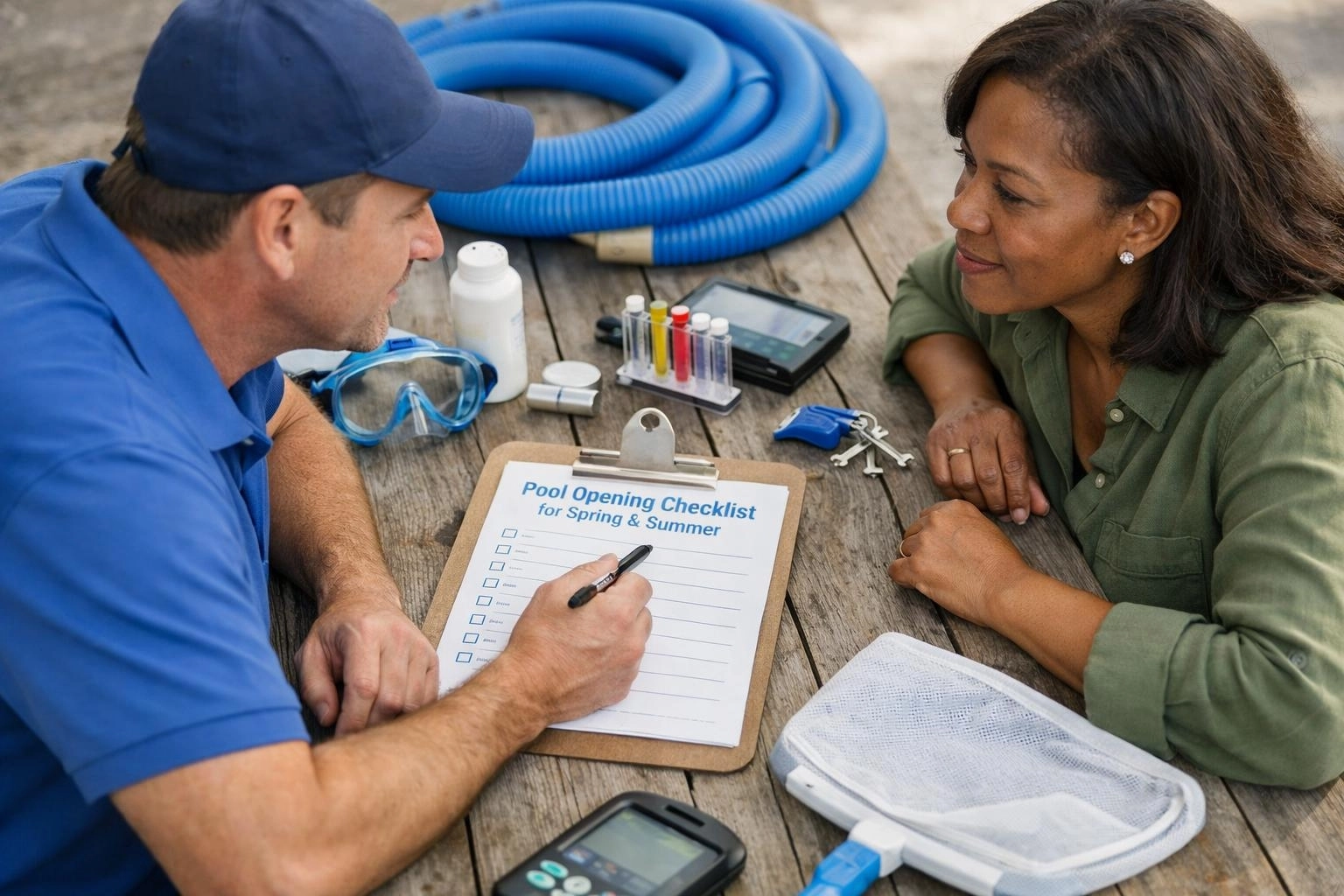
Before you begin, gather test strips, a skimmer net, and basic sanitizer so the work goes faster. In North Metro Atlanta, heavy pollen and leaf debris often collect under the cover, and spring storms can change water level overnight. A careful startup inspection cuts the chance of surprises later.
What to Check Before Opening Your Pool in Sandy Springs?
Pool opening starts with removing the cover, clearing debris, checking water level, and inspecting visible equipment before you turn on the pump. Sandy Springs homeowners should look for leaf buildup, standing water, cracks, leaks, and winter damage so small problems don't become expensive repair calls.
Early spring warm-ups in Sandy Springs can trigger algae growth faster than many homeowners expect, especially when the cover comes off late. If rain has raised the water or diluted sanitizer, handle cleanup and testing right away. A careful opening keeps the rest of the pool maintenance routine simple.
The Spring Pool Startup Checklist for Equipment and Circulation
Pool startup requires reassembling and testing the circulation system so water can move, filter, and sanitize correctly. The pump, filter, skimmer baskets, return lines, valves, and heater should be inspected, cleaned, and restarted in sequence to catch air leaks, clogs, or mechanical failures early.
The spring pool opening checklist works best when you start the system in order, not all at once. That sequence helps with pump and filter inspection, protects filtration, and makes basket cleaning easier if the skimmers collected extra pollen. If the water won't move cleanly, stop and troubleshoot before running the pump longer.
How to Test and Balance Water Chemistry After Opening?
Pool water should be tested and balanced right after opening so sanitizer can work and swimmers stay safe. Homeowners need to measure pH, free chlorine, total alkalinity, and stabilizer, then adjust the water before adding shock or allowing regular use.
| Test | What it tells you | Typical opening target |
|---|---|---|
| pH | Shows whether water is too acidic or too basic for comfort and sanitizer performance. | Usually kept in a normal swim range near 7.2 to 7.8. |
| Free chlorine | Measures active sanitizer available to fight germs and control algae. | Most pools aim for a working sanitizer level before swimmers enter. |
| Total alkalinity | Helps stabilize pH balance so chemistry doesn't swing too quickly. | Commonly held in a moderate range that supports stable water. |
| Cyanuric acid | Shows how much stabilizer is present to protect chlorine from sunlight. | Kept at a level that supports outdoor chlorine without over-stabilizing. |
Test strips are fine for a quick read, but more accurate testing helps when spring storms have diluted the water or pollen has loaded the pool with organic debris. Balance water chemistry before any long pump run, then add sanitizer and shock only if the test results call for it. This order protects filtration and supports algae prevention.
Red Flags That Mean You Need Pool Repair Before Swimming
Pool repair is needed before swimming when the pool loses water, the pump will not prime, fittings crack, the filter will not clear the water, or the chemistry will not hold. These warning signs usually point to leaks, circulation problems, or failing parts that should be fixed before the season starts.
If you see these problems, stop the opening process and fix the issue first. A small leak or cracked part can turn into a bigger equipment problem once the pump runs longer and the water warms up.
A Simple Pool Opening Schedule for Early Spring and Summer
Pool opening should happen early enough in spring to prevent algae growth and equipment strain from warming temperatures. A practical schedule is to inspect in early spring, complete startup before steady warm weather, and repeat basic maintenance checks through summer so the pool stays ready for use.
In Sandy Springs, the best timing is usually earlier than many people expect because warm afternoons can arrive before summer officially starts. Opening on time reduces stress on the system and keeps the pool usable when the first hot weekends hit.
When to Call a Swimming Pool Contractor in Sandy Springs?
A swimming pool contractor should be called when opening steps reveal leaks, electrical issues, stubborn algae, damaged equipment, or any startup problem that keeps the pool from circulating and sanitizing properly. In Sandy Springs, local pool service teams can diagnose seasonal damage faster and restore the pool before peak swimming weather.
Call for help if the pump will not start, the water stays green after shock, or you can't get the chemistry to hold after several tests. A team offering pool services can handle local issues like pollen-heavy cleanup, storm-related water changes, and startup inspection problems that come with seasonal demand. That support is especially useful when you want the pool ready before summer weekends.
If you're short on time or the equipment pad looks complicated, professional pool maintenance can save guesswork. The right contractor can check the circulation system, verify filtration, and spot hidden problems before they become expensive repairs.