Red Flags When Hiring a Swimming Pool Contractor in Sandy Springs, GA
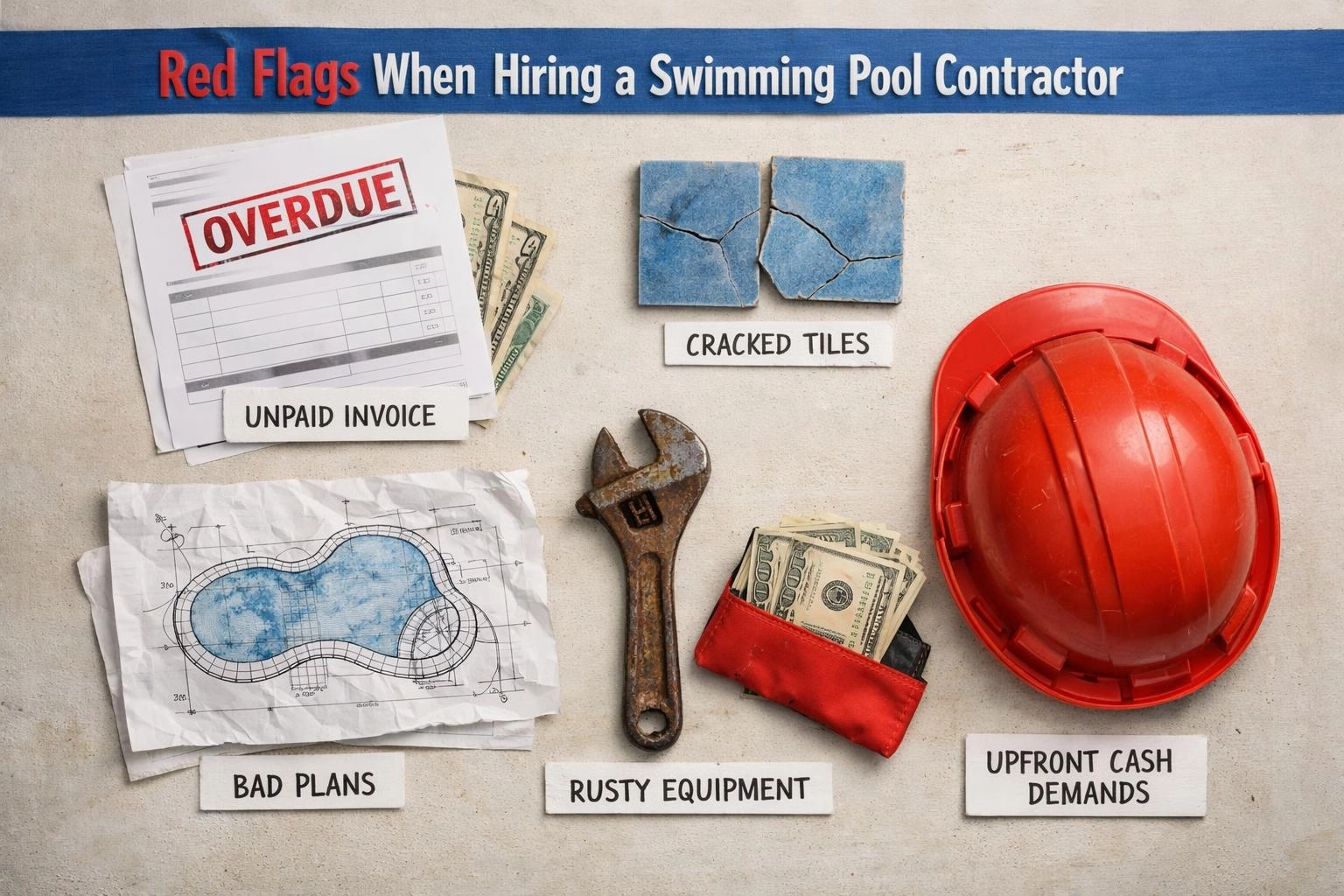
Common red flags when hiring a swimming pool contractor include no valid license, no proof of insurance, vague estimates, unusually low bids, pressure to pay upfront, poor local references, and reluctance to explain permits, timelines, or warranties. In Sandy Springs, GA, a trustworthy pool builder should also understand local permitting, site drainage, and weather-related construction risks. If a contractor avoids written details or cannot verify credentials, do not hire them.
What Are the Most Common Red Flags When Hiring a Swimming Pool Contractor?
Swimming pool contractor red flags are clear warning signs that the builder may be unlicensed, uninsured, inexperienced, or short on cash. The biggest clues are vague pricing, pushy sales talk, missing references, weak communication, and no written scope. In Sandy Springs, a reliable contractor should also understand local permits, drainage, and site conditions.
A trustworthy pool construction company should be a construction professional who explains project scope, inspection steps, and scheduling in plain language. In metro Atlanta, rainfall and drainage can create waterproofing problems if the site is not planned well, so the builder should address runoff, soil movement, and equipment staging before work begins.
What Not to Tell Your Contractor Before the Estimate Is Locked In?
Do not tell a contractor your absolute maximum budget, your urgency to start, or that you have already chosen them before comparing bids. Those details can weaken your bargaining position and lead to higher pricing or rushed choices. Share your goals, must-haves, and site constraints, but keep your options open until you review the contract.
The safest approach is to talk about results, not pressure. A clear homeowner stays in control, checks each proposal for permit compliance, and compares options before agreeing to any contract.
How to Verify a Pool Builders License in Georgia?
A pool builders license should be verified directly through Georgia’s licensing records and matched to the company name, owner name, and project scope. Ask for the license number, check whether it is active, and confirm the business is allowed to do the work being proposed. If the details do not match, treat that as a major red flag.
Start by asking for the pool builders license number, the legal business entity, and the name of the person signing the contract. Then compare those details with Georgia licensing records. The license should be active, tied to the right trade classification, and consistent with the scope of pool construction being offered. If a company says it is a licensed contractor but cannot produce matching records, that is not a small paperwork issue; it is a credential problem.
You should also confirm that the contractor credentials fit the exact job. A residential pool construction company may be qualified for one type of project but not another, especially when the work includes electrical, grading, or drainage coordination. For homeowners in Sandy Springs, GA, credential checks matter even more because local permitting and inspection rules can slow a job if the paperwork is wrong from the start. Ask how the contractor handles the Pool Construction Permit, and make sure the answer is specific, not vague.
If the business name on the estimate, the license record, and the insurance certificate do not line up, stop and investigate before signing anything. That mismatch is often a sign of weak organization or hidden risk.
Why Swimming Pool Contractor Insurance Matters Before Work Starts?
Swimming pool contractor insurance protects you if the project causes property damage, jobsite injuries, or disputes over responsibility. A legitimate builder should provide proof of general liability coverage and workers’ compensation if applicable. Without insurance, a homeowner in Sandy Springs can be left facing costly cleanup, damage, and legal headaches.
| Coverage | Why it matters | What to ask for |
|---|---|---|
| General liability | Helps cover accidental property damage to your home, yard, fence, or neighboring structures. | A current insurance certificate naming the contractor or company. |
| Workers' compensation | Helps protect against injury claims tied to jobsite safety. | Proof that coverage is active if employees will be on site. |
| Policy match | Confirms the insured builder is the same business shown on the estimate and contract. | Match the legal name, address, and dates on every document. |
| Active dates | Shows the policy is in force during pool construction. | Check start and end dates before any deposit is paid. |
Insurance is not just a formality. It is part of the risk control that separates a professional contractor from a risky one. If the builder hesitates to show coverage, the safest choice is to move on.
DIY vs Professional Pool Construction: What Looks Cheaper, What Costs More
DIY pool construction can look cheaper upfront, but professional pool construction usually cuts costly mistakes tied to grading, drainage, permits, code compliance, and long-term repairs. In Sandy Springs, the real difference is not just labor cost; it is risk control, project coordination, and warranty-backed accountability. The safer choice is usually the licensed professional.
| Factor | DIY | Professional |
|---|---|---|
| Permits | You must manage every approval, inspection, and submission. | The contractor usually handles permit compliance and inspection scheduling. |
| Drainage | Mistakes can lead to flooding, settling, or waterproofing problems. | A professional plans for site drainage and grading from the start. |
| Inspection | You handle code questions, corrections, and rechecks yourself. | The builder coordinates inspections and fixes issues faster. |
| Warranty | No built-in warranty support or service commitment. | Usually includes warranty terms and a clearer service path. |
| Long-term cost | Lower starting cost can turn into expensive repairs. | Higher upfront cost can reduce avoidable corrections later. |
In metro Atlanta, rainfall and uneven site conditions make grading and drainage especially important. A professional pool installer also helps with scheduling, material staging, and coordination on tighter residential lots, which can be hard for a DIY project to handle well.
Pool Builders Near Me: How to Compare Local Companies in Sandy Springs
Pool builders near me should be compared by local experience, project portfolio, licensing, insurance, communication, and knowledge of Sandy Springs conditions. Choose contractors who have completed similar pools nearby, can explain permits clearly, and provide a detailed written proposal. Local relevance matters because soil, drainage, access, and neighborhood expectations affect the build.
Local experience matters because neighborhood access limits and tighter residential lots can affect equipment staging, deliveries, and cleanup. A contractor who knows Sandy Springs neighborhoods is more likely to plan realistically and avoid delays tied to site access or drainage surprises.
When a Contractor Refuses to Put Pricing, Timeline, or Warranty in Writing?
A contractor who refuses to document pricing, timeline, warranty terms, or payment milestones is a serious risk. Written terms protect both sides and reduce misunderstandings about materials, inspections, and completion dates. If the builder insists on verbal promises only, you should treat that as a warning sign and keep looking.
A strong written contract should list the timeline, the payment schedule, the warranty, and the process for every change order. It should also explain who handles permits, who orders materials, and what happens if weather delays the job. Without that, you have little protection if the project stalls or costs rise.
Ask for the exact warranty terms before you pay a deposit. If the answer is “we will work it out later,” you do not have enough protection. A serious pool installer will put the details in writing because a contract cuts confusion and gives both sides a clear path if problems come up.
Frequently Asked Questions
If you want help reviewing a bid, checking contractor credentials, or comparing project scope before you sign, use a trusted local pro and keep every promise in writing.
Related Resources
Pool Installation Checklist for Sandy Springs Homeowners
pool installation checklist
What's RequiredPool Construction Preparation Checklist
pool construction checklist
What's RequiredPool Opening Checklist for Spring and Summer
pool opening checklist
What Goes With ItConcrete Pool Construction