What Is the Best Type of Pool to Install in Sandy Springs, GA?
The best type of pool to install in Sandy Springs, GA depends on your budget, timeline, and upkeep goals. Vinyl liner pools cost less to install at first. Fiberglass pools usually land in the middle for cost and care. Gunite pools give you the most custom options, but they cost more upfront. In Sandy Springs, soil, drainage, and site access also shape which pool type gives the best value.
What Is the Best Type of Pool to Install for Sandy Springs Homeowners?
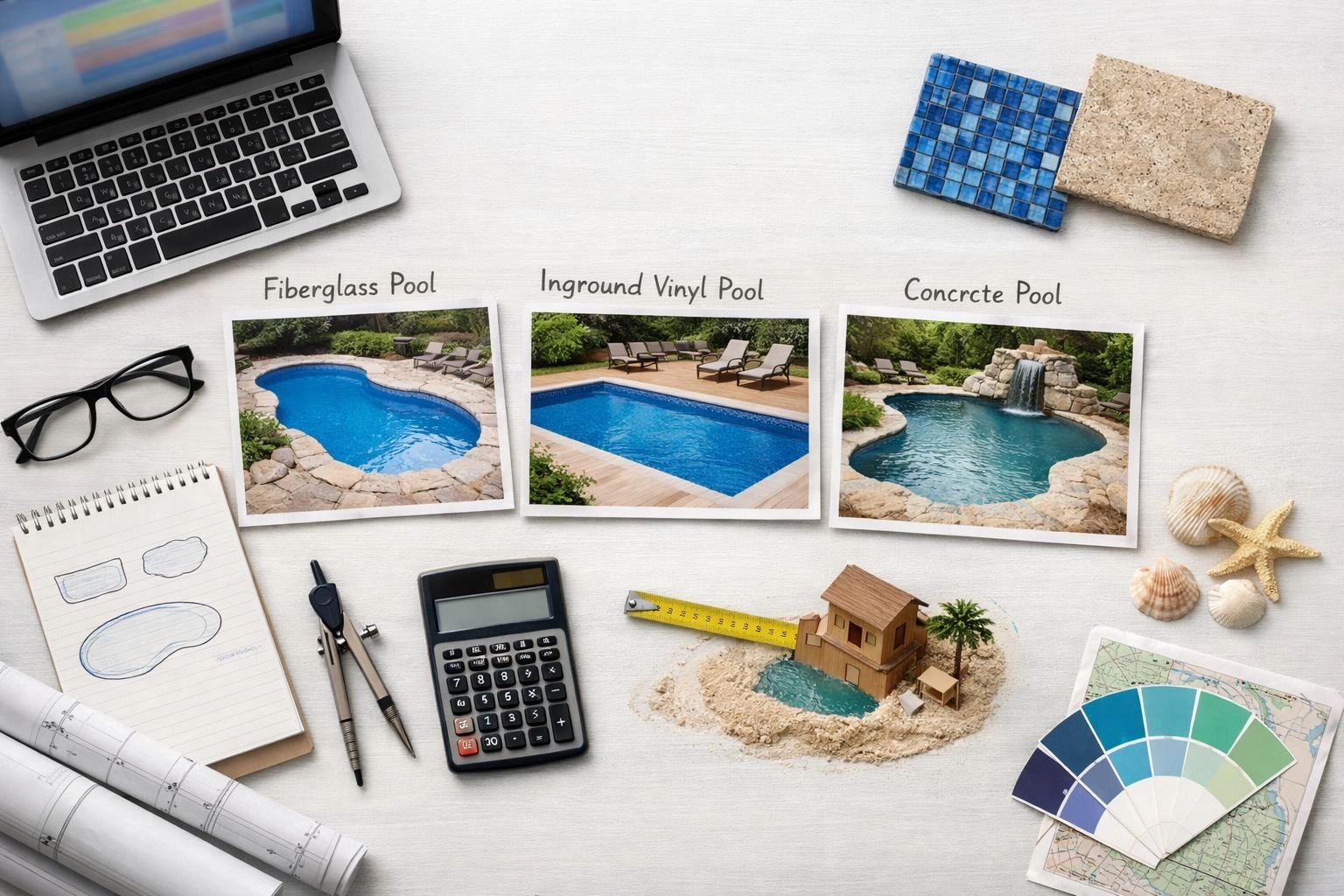
The best type of pool to install for most Sandy Springs homeowners is the one that fits the yard, the budget, and the upkeep you want. An inground pool can be a smart home upgrade, but the right choice changes with lot size, slope, and access. A vinyl liner pool is usually the lowest upfront cost option. A fiberglass pool comes as a prefabricated shell and installs faster. A gunite pool is best when you want custom shapes and features.
If you want the simplest path, compare the whole pool system. That includes excavation, permits, coping, landscaping, and long-term maintenance. A residential pool that looks affordable at first can cost more later if the site needs major grading or drainage work. In Sandy Springs, GA, clay-heavy soil and uneven yards can make excavation harder, so the best backyard pool is often the one that works with the site. A good inground pool builder will also check utility access and equipment staging before suggesting a design.
For buyers who want faster installation with less disruption, fiberglass often stands out because the shell arrives ready to set. For buyers who want full design freedom, gunite leads. For buyers who want a practical way into outdoor living, vinyl still makes sense. In short, the best kind of inground pool is the one that balances upfront cost, durability, custom options, and your property’s real conditions.
Quick Comparison: Cost, Timeline, Maintenance, and Best Fit
Vinyl liner pools are usually the most cost-effective to install, fiberglass pools often have the easiest upkeep, and gunite pools offer the most design freedom. For Sandy Springs homeowners, the best fit often depends on whether you want lower initial cost, faster installation, or long-term customization.
| Factor | Option A | Option B |
|---|---|---|
| Cost | Vinyl liner pool: usually the lowest upfront cost for an inground swimming pool | Fiberglass pool and gunite pool: usually higher initial cost, with gunite often highest |
| Timeline | Fiberglass pool: often faster to install because the shell is prefabricated | Gunite pool: longer build time because of excavation, forming, curing, and finishing |
| Maintenance | Fiberglass pool: usually the easiest to maintain, with a smooth pool shell surface | Vinyl liner pool and gunite pool: more upkeep over time, including liner replacement or resurfacing |
| Best fit | Vinyl liner pool: budget-focused buyers wanting a cost-effective inground pool | Gunite pool: homeowners who want customization, while fiberglass fits low-maintenance priorities |
Most projects fall between lower-cost, quicker-build, and high-customization choices. The best choice is rarely about one feature alone. It should fit the property, the family’s habits, and the long-term maintenance plan.
Which Inground Pool Is the Best Value for the Money?
Vinyl liner pools are the best inground pool for the money when the goal is the lowest initial installation cost. Fiberglass pools usually cost more than vinyl but less than many gunite projects, while gunite tends to sit at the high end. In Sandy Springs, access, grading, and drainage can change the total value.
Value is more than the number on the estimate. A cost-effective inground pool should also account for excavation effort, landscaping repair, and any drainage work needed to protect the structure. On narrow lots or properties with mature trees, equipment access can be tight, which may add build complexity. In those cases, a simpler installation can hold value better than a highly custom plan.
Vinyl often gives the most budget-friendly starting point, especially for homeowners who want a backyard pool without a big upfront hit. Fiberglass can be a strong middle choice because the prefabricated shell may shorten the timeline and cut some maintenance tasks. Gunite can still be the right value for buyers who want a unique shape, built-in seating, or other custom details that are hard to get with a standard shell.
If you are comparing the best inground pool for the money, look at the full cost over time, not just day one. Upfront cost, maintenance, and future repairs all matter.
Which Pool Type Lasts the Longest?
Gunite pools are usually the longest-lasting option because the structure is highly durable and can be resurfaced over time. Fiberglass pools also have strong longevity with lower upkeep, while vinyl liner pools usually need liner replacement as part of normal ownership. Sandy Springs weather and water management affect how each one performs.
Pool lifespan depends on both material and care. A gunite pool can last for decades when the shell is built well and resurfaced as needed. Fiberglass often holds up well because the smooth pool shell resists some wear and needs less care. Vinyl can still be a smart choice, but the liner wears out over time, so replacement becomes part of ownership.
Local conditions matter too. Sandy Springs, GA can bring clay soil, drainage issues, and tree-root pressure that affect durability. If runoff collects around the pool or the yard shifts over time, even a strong structure can run into problems. Good grading, proper excavation, and water control help extend pool life no matter which type you choose.
So, if you want to know what type of pool lasts the longest, gunite usually comes first. Fiberglass often gives the best mix of durability and easy care. Vinyl works best when budget now matters more than replacement later.
Pros and Cons of Each Inground Pool Type
Each pool type has tradeoffs: vinyl liner pools are affordable and flexible but need liner replacement, fiberglass pools are quick to install and low maintenance but offer fewer shapes, and gunite pools are highly customizable and durable but cost more and take longer to complete.
Vinyl Liner Pools: Pros and Cons
Fiberglass Pools: Pros and Cons
Gunite Pools: Pros and Cons
To compare the pros and cons fairly, think about how much customization you need versus how much time and money you want to spend now. A simple plan can save hassle. A custom design can create a more tailored outdoor living space.
What Sandy Springs Conditions Affect Pool Choice Most?
Sandy Springs conditions can change the best pool choice because grading, drainage, and limited access can influence construction complexity and long-term performance. Homeowners should also plan for local permitting and for clay-heavy or uneven yard conditions that can affect excavation and structural stability.
In Sandy Springs, GA, soil conditions matter a lot. Clay-heavy ground can make excavation slower and drainage more important, especially on sloped or uneven lots. If water does not move away from the pool system the right way, the structure and nearby landscaping can suffer. That is one reason a careful site review matters before choosing between vinyl, fiberglass, and gunite.
Tree cover is another local factor. Mature landscaping can limit equipment access, which may push some homeowners toward a pool type with simpler installation needs. That access issue can also affect where materials are staged and how much yard disruption the build creates. Even a strong design can become harder to build if machines cannot reach the work area easily.
The permit process and inspection steps also affect timing. Some projects move smoothly, while others need more coordination before work begins or before final inspection is done. Because of that, faster-install options can be attractive when homeowners want less disruption and a quicker return to normal yard use. The best result usually comes from matching the pool to the lot, not forcing the lot to fit the pool.
If you want help comparing options for your property, an experienced inground pool builder can review the site, explain the permit steps, and recommend the right pool system for your home.
Frequently Asked Questions
Related Resources
Pool Installation Checklist for Sandy Springs Homeowners
pool installation checklist
What's RequiredPool Construction Preparation Checklist
pool construction checklist
What Goes With ItCustom Pool Design and Installation
What Goes With ItGunite Pools vs Fiberglass Pools
gunite vs fiberglass pool