What Is the Best Type of Pool to Install in Sandy Springs, GA?
The best type of pool to install in Sandy Springs, GA depends on your budget, timeline, and upkeep goals. Vinyl liner pools usually cost less at first, fiberglass pools often land in the middle for cost and care, and gunite pools give you the most design choices but often cost more up front. For Sandy Springs homeowners, soil conditions, drainage, and permits can also shape the best choice.
Which Inground Pool Is Best for Your Budget and Goals?
Vinyl liner pools are the best inground pool for the money when upfront cost matters most. Fiberglass pools are a strong middle choice, and gunite pools work best when design freedom matters more than price. In Sandy Springs, the right answer depends on lot conditions, access, and how much upkeep you want.
The best inground pool for your home is the one that fits your project goals, not just the sticker price. A pool builder can review site access, digging limits, and the pool deck layout before you move ahead. For many homeowners, the choice comes down to the lowest upfront cost, the easiest care, or the most room for customization.
| Factor | Option A | Option B |
|---|---|---|
| Initial installation cost | Vinyl liner pools | Fiberglass pools and gunite pools |
| Maintenance | Fiberglass pools | Vinyl liner pools and gunite pools |
| Timeline | Fiberglass pools | Gunite pools |
| Best for | Budget-minded homeowners | Custom designs and difficult layouts |
Real projects show a clear pattern. Vinyl liner pools can lower the entry price, fiberglass pools often balance comfort and upkeep, and gunite pools fit owners who want a one-of-a-kind residential pool. If your lot has tight access or tricky grading, the pool shell choice can affect digging, landscaping, and the rest of the home project.
Compare Vinyl, Fiberglass, and Gunite Pools Side by Side
Vinyl liner pools usually cost less to install. Fiberglass pools often install faster and need moderate upkeep, while gunite pools offer the most design flexibility but usually take more time and a bigger budget. A side-by-side look helps Sandy Springs homeowners match the pool type to their property and goals.
For a quick read, think of vinyl liner pool for lower initial spend, fiberglass pool for faster pool installation, and gunite pool for a custom backyard pool with a concrete shell. Each option can work well, but the best fit depends on how much time you have, how much upkeep you will accept, and how hard your site is to reach.
| Pool Type | Cost | Timeline | Maintenance | Best For |
|---|---|---|---|---|
| Vinyl liner pools | Usually the lowest upfront cost | Often moderate | Needs liner replacement over time | Value-focused homeowners |
| Fiberglass pools | Middle-range cost | Often the fastest install | Generally easier care | Low-maintenance buyers |
| Gunite pools | Highest upfront budget in many projects | Usually longest | More ongoing care may be needed | Custom design and unique sites |
The right residential pool also depends on the rest of the yard. A pool deck, retaining work, and landscaping can affect both schedule and price, especially when digging and drainage need to be planned together. In many cases, a faster-install option reduces project headaches.
What Are the Pros and Cons of Each Pool Type?
Vinyl liner pools are appealing because they have a lower upfront cost, but they need liner replacement over time. Fiberglass pools offer smooth surfaces and easier care, but they have fewer shape options. Gunite pools give you maximum customization, but they usually need more upkeep and a larger investment. The best choice depends on whether you value price, speed, or flexibility most.
Below is a simple way to weigh the pros and cons of each backyard pool type before you talk with a pool builder. These points also help compare lifetime maintenance costs, because the cheapest install is not always the cheapest way to own a pool.
Vinyl Liner Pools
Fiberglass Pools
Gunite Pools
For Atlanta-area heat and long swim seasons, many homeowners care more about comfort and easy cleaning. That makes a smooth fiberglass surface or a durable gunite shell especially helpful during heavy summer use.
What Type of Pool Lasts the Longest?
Gunite pools generally last the longest because their structural shell is highly durable, while fiberglass pools also have strong longevity with lower maintenance. Vinyl liner pools can still be a good option, but the liner itself is the part most likely to need replacement sooner than the shell-based alternatives.
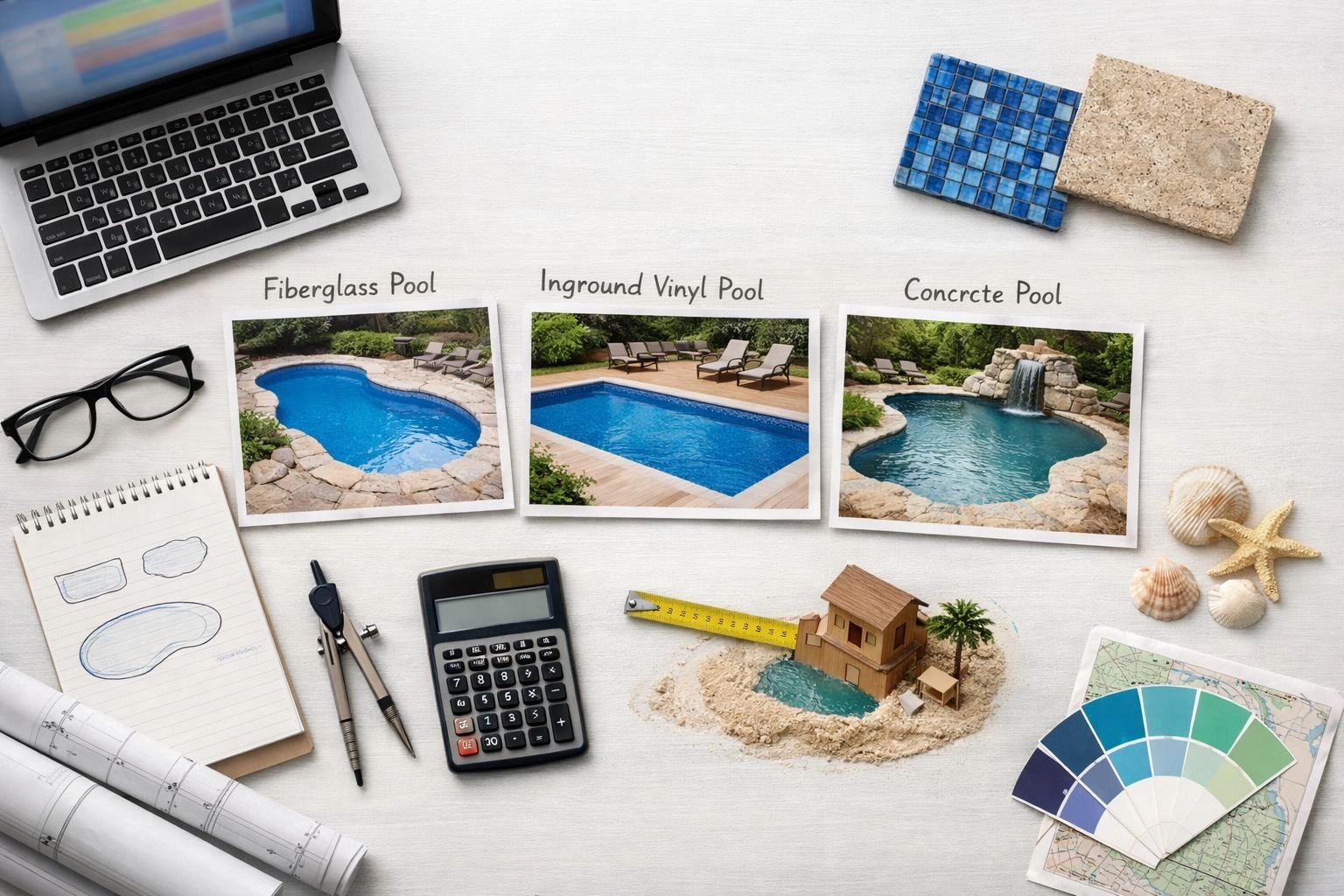
If durability is your top priority, gunite pools usually lead because the concrete shell is built for long service life. Fiberglass pools also hold up well and often need less routine attention, which can lower ownership stress. Vinyl liner pools remain practical, but the liner wears out over time, so lifespan depends on replacement planning and normal care.
In plain terms, the longest-lasting choice is often the one with a strong pool shell and good care over time. A pool that is built well, cleaned often, and protected from drainage problems can last longer than a bigger project that is poorly maintained.
How Sandy Springs Lot Conditions Affect Pool Choice?
Sandy Springs lot conditions can affect the best pool type because grading, drainage, narrow access, and permit rules may change installation complexity and cost. Homes with tight access or harder yards may benefit from the faster, more predictable installation of fiberglass, while custom sites may make gunite worth it.
In Sandy Springs, GA, residential lots can vary a lot from one neighborhood to the next. Some properties have easy equipment access, while others create delays because of narrow driveways, steep slopes, or limited staging room for digging. Drainage and grading matter too, because runoff can change where a pool should sit and what support work is needed.
Local permit and inspection steps can also add coordination needs, so a pool installation plan that moves faster may reduce headaches on some properties. That is one reason a fiberglass option can be attractive when the site is simple, while a custom gunite build may make more sense for a complex yard with special design goals.
Which Pool Should You Choose for the Best Value in Sandy Springs?
Vinyl liner pools are the most cost-effective inground pool to install when the goal is the lowest initial price. Fiberglass pools can offer a strong balance of cost and upkeep, while gunite pools make sense when customization and long-term design priorities matter more than upfront expense. The best value depends on your project goals.
The best value is the pool that matches your priorities. If you want the best inground pool for the money, vinyl often wins on entry price. If you want a lower-fuss backyard pool with a fair budget, fiberglass is a strong middle ground. If you want a residential pool that can fit a unique yard or a detailed outdoor living plan, gunite may be worth the extra cost.
For many families, value is not just price. It is also the time saved, the maintenance burden avoided, and the comfort of knowing the pool will fit the property. A trusted pool builder can help compare the full ownership picture, not just the first invoice.
Frequently Asked Questions
Related Resources
Pool Installation Checklist for Sandy Springs Homeowners
pool installation checklist
What's RequiredPool Construction Preparation Checklist
pool construction checklist
What Goes With ItCustom Pool Design and Installation
What Goes With ItGunite Pools vs Fiberglass Pools
gunite vs fiberglass pool