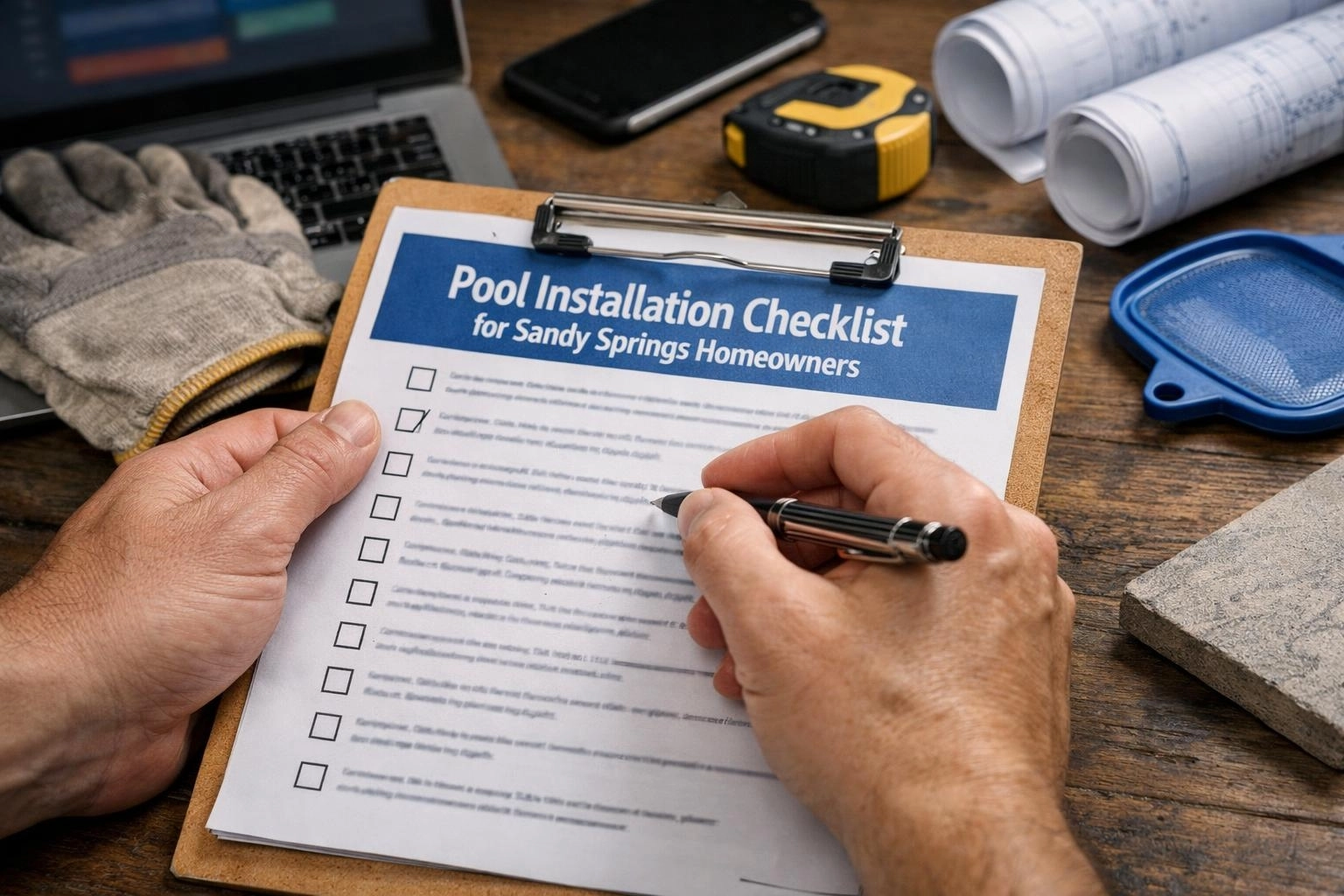
Pool Installation Checklist for Sandy Springs Homeowners
A pool installation checklist helps Sandy Springs homeowners plan the job, check permits, confirm utility locations, and prep the yard. It also covers drainage, setbacks, inspections, and startup steps. Use it before you sign a contract, so your pool installation stays on budget, on schedule, and ready for Georgia weather.
Pool installation checklist guides Sandy Springs homeowners through the steps, rules, and risk checks for a swimming pool installation. Start with a site evaluation, confirm property lines, and review the permit packet before any digging begins. A careful pre-construction checklist can prevent delays and protect your budget.
In Sandy Springs, GA, local permitting, lot conditions, and homeowner expectations can shape the whole job. A strong pool planning checklist also helps you spot issues with excavation access, drainage, setbacks, and utility marking early. That can keep expensive change orders and inspection delays off your plate.
What Should You Check Before Installing a Pool in Sandy Springs?
Pool installation checklist begins with site conditions, property lines, setbacks, utilities, drainage, access, and permit needs before any excavation starts. Sandy Springs homeowners should confirm the lot can support the pool shell, equipment placement, and code-compliant safety features. That helps keep the project moving after digging begins.
What Property and Yard Details Matter Most?
Local proof matters here: Sandy Springs lots often need close attention to setbacks, easements, and tree root protection when planning pool placement. North Georgia rain and clay-heavy drainage conditions can expose grading and runoff problems during excavation and backfill. A thorough site evaluation is worth the time.
Which Permits, Inspections, and Safety Rules Apply?
Pool installation checklist should include permit verification, inspection timing, and safety requirements like barriers, alarms, and proper bonding before the pool is filled and used. In Sandy Springs, the contractor should coordinate approvals early so the build passes required checks and avoids rework or delays.
| Item | What to confirm | Why it matters |
|---|---|---|
| Permit | The swimming pool contractor has the correct permit before excavation begins. | It keeps the project aligned with local approval steps and avoids stop-work issues. |
| Inspection | Required checks are scheduled at the right build phases, not after the pool is already closed in. | Missed inspections can mean tearing work back open or delaying fill-up. |
| Barrier fence | The safety barrier is installed with proper height, latch, and access control. | It reduces unauthorized access and supports code-compliant pool safety. |
| Electrical bond | Bonding is installed and checked before equipment startup. | It helps protect swimmers and equipment from electrical hazards. |
| Pool contractor | The contractor owns the permit path, inspection schedule, and code sequence. | Clear responsibility keeps the job moving and reduces avoidable delays. |
Most projects also need coordination around the drainage system, the barrier fence, and the final inspection. Ask the contractor which approvals happen before plaster, decking, or startup, so no one skips a required step. A good home improvement checklist should treat permitting as part of the build, not an afterthought.
How Do You Compare Pool Builders Before Signing?
Pool installation checklist should help you compare builders by license, insurance, references, project scope, schedule, warranty, and communication process. Sandy Springs homeowners should choose a contractor who explains excavation risks, equipment options, and inspection responsibility clearly. That keeps the job organized from contract to completion.
A reliable contractor agreement should read like a complete construction planning guide, not a vague sales sheet. Ask for the exact equipment package, the finish schedule, and who will answer inspection questions if the city asks for revisions. That clarity is often the difference between a smooth build and a stressful one.
What Should Happen During Excavation, Plumbing, and Equipment Install?
Pool installation checklist during construction should track excavation, steel or shell placement, plumbing runs, electrical rough-in, equipment pad setup, backfill, and leak checks. Sandy Springs homeowners should expect soil and access conditions to affect timing. Each phase needs sign-off before the contractor moves to the next step.
During this stage, the swimming pool build checklist should also track drainage changes and any support needed around the shell. If the site has poor runoff, the contractor may need to regrade, add a drainage system, or slow the backfill process. That helps the pool structure stay stable.
Homeowners should ask for a quick walkthrough at the end of each major step. That includes excavation depth, plumbing pressure checks, and equipment pad placement. The best projects feel methodical, with clear approvals before the next trade enters the site.
What Red Flags Should Stop You from Moving Forward?
Pool installation checklist should flag missing permits, vague pricing, unclear drainage plans, weak warranty terms, and contractors who rush the contract without explaining site risks. If a Sandy Springs homeowner sees these red flags, it usually means the project could face delays, budget overruns, or failed inspections later.
Other warning signs include pressure to sign before you review the site, no proof of insurance, or unclear answers about the safety barrier and electrical bonding. A strong project should feel transparent from the first estimate through the final inspection. It should not feel rushed or hidden behind sales language.
What Should You Confirm Before Filling and Opening the Pool?
Pool installation checklist should end with a final inspection, equipment testing, water balancing, safety accessory setup, and owner training. Before opening the pool in Sandy Springs, the homeowner should confirm the contractor has completed punch-list items, explained maintenance, and verified that the system runs correctly under normal operating conditions.
A good startup phase should feel like a handoff, not a guess. The contractor should explain the filtration system, show how to monitor water balance, and make sure the pool is safe for first use. That final walkthrough helps turn the construction project into a low-stress part of your home improvement checklist.
Frequently Asked Questions
Related Resources
Custom Pool Design and Installation
Everything About ItPool Builder vs Custom Pool Builder: What’s the Difference?
pool builder vs custom pool builder
Everything About ItInground Pool Builder: Everything You Need to Know
inground pool builder
What It CostsPool building cost in Sandy Springs, GA
pool building cost