Best Pool Construction Options for Sandy Springs, GA Homes
The best pool construction for Sandy Springs, GA depends on what matters most to you. Concrete and gunite pools give you more design freedom and long-term strength, while fiberglass pools offer a smooth gelcoat surface and a faster install. If you want a custom shape, concrete is often the best fit. If you want lower maintenance and a quicker build, fiberglass usually wins. Sandy Springs homeowners should also think about soil, yard access, and seasonal weather before choosing a pool type.
What Is the Best Pool Construction for Sandy Springs Homes?
Pool construction works best when it matches your goals, yard, and upkeep needs. For Sandy Springs homes, fiberglass often fits homeowners who want faster installation and easier care, while concrete or gunite works better for custom shapes and full design control. The right choice depends on budget, durability, and long-term maintenance.
The best answer to what is the best pool construction starts with the shell you need, not just the look you want. In Sandy Springs, GA, a small yard, mature trees, or a sloped lot can change the build. Gunite pools fit complex designs, fiberglass pools fit shorter timelines, and concrete pools offer a durable in-ground pool option with high customization. The best pool installation is the one that balances strength, surface finish, and maintenance over time.
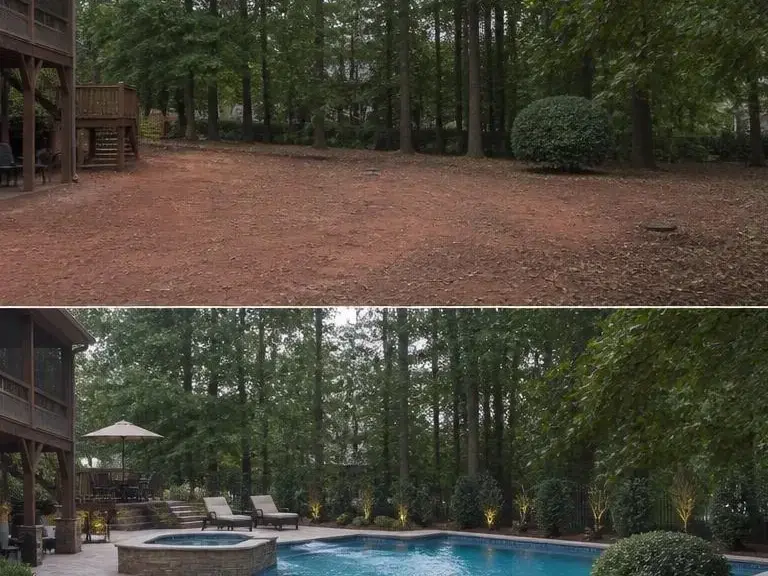
Local homeowners also need to think about access for digging, delivery, and equipment. Narrow drives and landscaping can make a pool build harder, so the easiest shell to place is not always the best pick. Seasonal weather in metro Atlanta can also affect curing and the installation timeline, which makes timing and build method part of the decision.
Quick Comparison: Gunite vs Fiberglass vs Concrete Pools
Gunite, fiberglass, and concrete pools each serve a different need. Fiberglass usually installs faster and needs less daily upkeep, while gunite and concrete give you more customization and strong durability. For Sandy Springs properties, the best option depends on access, soil, slope, and how much customization you want.
| Factor | Gunite pools | Fiberglass pools |
|---|---|---|
| Cost | Often higher upfront because of custom excavation, forming, and finish work. | Often more predictable upfront, with fewer site-built steps. |
| Timeline | Usually longer because the pool shell is built on site and needs curing. | Usually faster because the shell arrives preformed and can be set quickly. |
| Maintenance | Needs more surface care over time, especially as the pool finish ages. | Often easier to maintain because the gelcoat surface is smooth and nonporous. |
| Best for | Custom shapes, unique depths, and homeowners who want maximum design flexibility. | Faster builds, easier upkeep, and yards where access and timing matter. |
For many Sandy Springs homeowners, the practical choice comes down to site conditions. If your lot has limited access, a fiberglass shell may cut down on disruption. If you want a spa spillover, custom tanning ledge, or unusual shape, a gunite pool can handle more design freedom. The comparison is not just about budget. It is also about how the pool build fits the property.
Gunite Pools: Pros
Gunite Pools: Cons
Fiberglass Pools: Pros
Fiberglass Pools: Cons
Concrete Pools: Pros
Concrete Pools: Cons
What Type of Pool Is Most Durable?
Concrete pools are very durable, and fiberglass pools are also highly durable because of their gelcoat surface. Concrete can handle heavy use and custom builds, but its finish usually does not last as long as fiberglass gelcoat. For Sandy Springs homeowners, the most durable choice often depends on whether you value shell strength or surface life.
If your top goal is tough construction, concrete usually leads. If you want a smoother surface that holds up well with less fuss, fiberglass can be the better long-term fit. In either case, yard access and soil conditions affect how well the pool shell is installed, and that matters just as much as the material itself.
Pool Concrete vs Fiberglass: Which Is Better?
Pool concrete vs fiberglass comes down to tradeoffs. Concrete gives you more freedom in shape, depth, and features, which helps on difficult Sandy Springs lots. Fiberglass usually gives you a smoother surface, a shorter build time, and less ongoing maintenance. If customization matters most, concrete wins. If convenience matters most, fiberglass often does.
| Factor | Concrete | Fiberglass |
|---|---|---|
| Customization | Highest flexibility for layout, depth, and features. | More limited because the shell is preformed. |
| Maintenance | More surface upkeep over time, especially as the pool finish wears. | Often easier to maintain because the gelcoat stays smooth. |
| Installation time | Typically longer due to on-site construction and curing. | Typically shorter because the shell arrives ready to place. |
| Surface finish | Can be tailored, but may need renewal sooner. | Smooth gelcoat surface is a major advantage. |
For homeowners comparing pool concrete vs fiberglass, the best answer is usually tied to the property. A narrow side yard, mature landscaping, or hard-to-reach rear access can make a faster shell install appealing. On the other hand, a large lot or a plan that calls for custom curves may make a concrete pool the stronger choice.
If long-term value matters most, look beyond the first price. Concrete can deliver a tailored result, but fiberglass often wins on less maintenance and quicker use. Both can be smart investments when they match the site.
Pool Concrete vs Pavers: What Should Sandy Springs Owners Know?
Pool concrete vs pavers is not really a pool-shell comparison. It is a pool-deck choice. Concrete decking is usually simpler and more uniform, while pavers can offer better drainage, easier repairs, and more design options around a Sandy Springs pool. The best choice depends on style, traction, and how you want the surrounding space to work.
For local yards, drainage matters because heavy rain can collect around the pool area if the deck is not planned well. That is why many homeowners compare decking materials along with excavation and grading. A smart surround can protect the pool shell and improve long-term value.
What Are the Three Types of Pools?
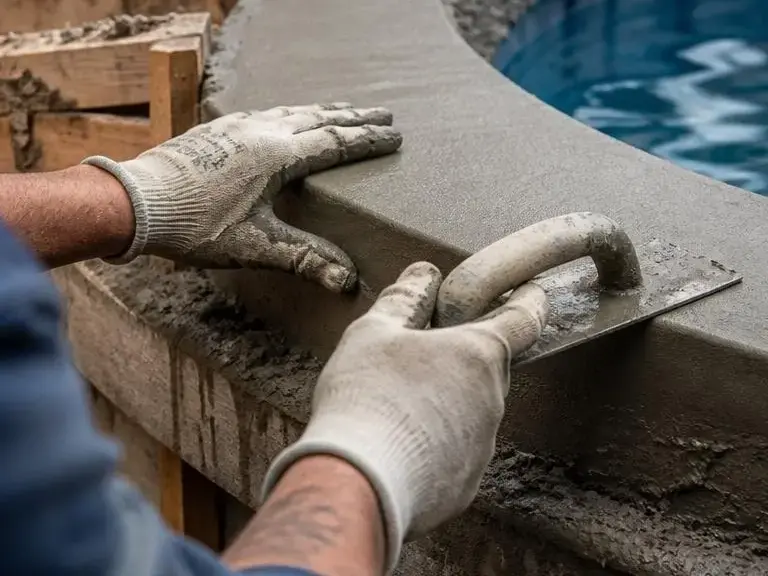
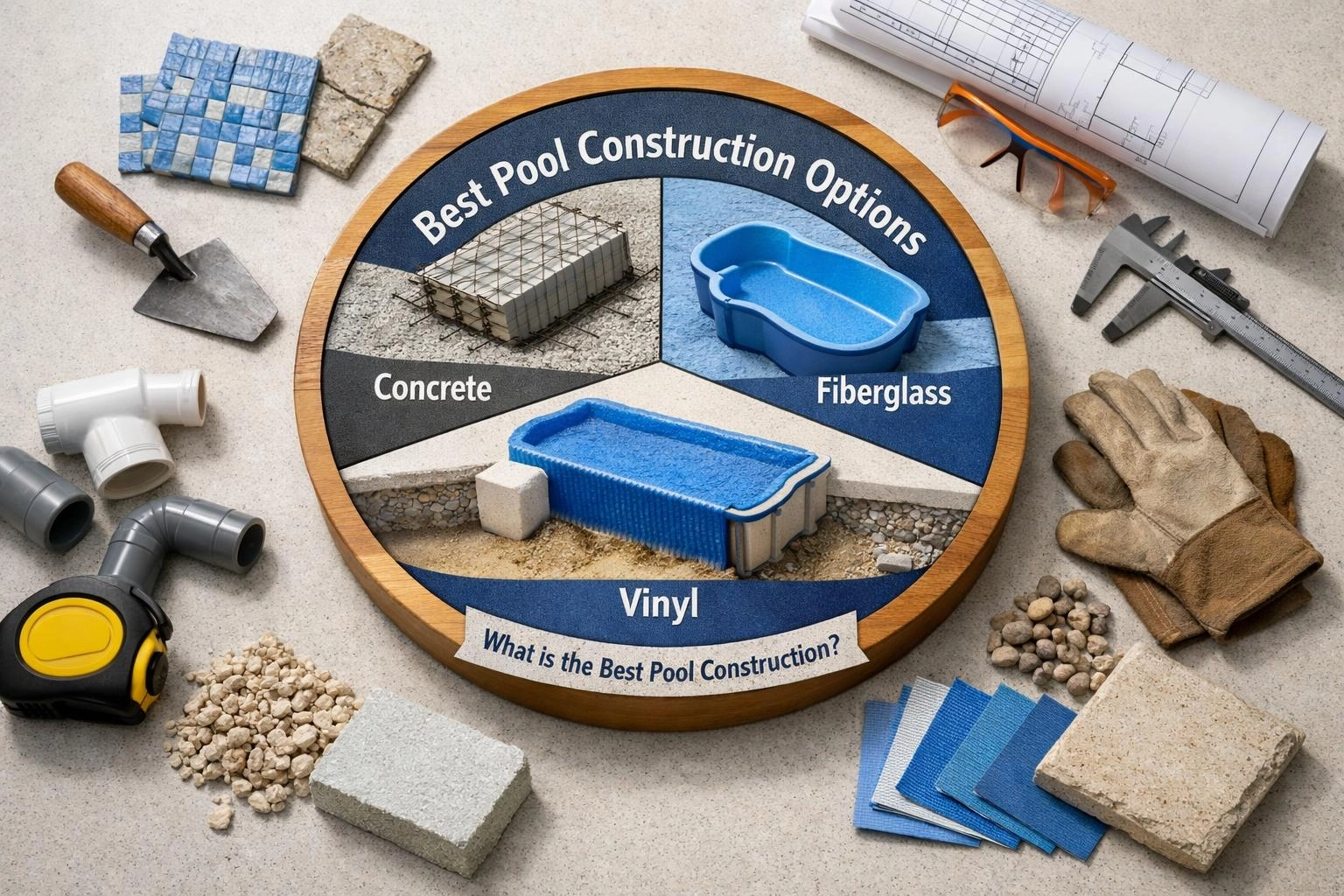
The three types of pools most homeowners compare are gunite pools, fiberglass pools, and concrete pools. Gunite and concrete are closely related, with gunite referring to a concrete application method used for custom builds. Fiberglass is a preformed shell option that usually installs faster and needs less surface maintenance.
When people ask about the three types of pools, they are usually choosing between flexibility, speed, and upkeep. That is why a solid pool installation plan should look at the pool shell, the pool finish, and the site before any design is final.
Which Pool Construction Is Best for Sandy Springs Soil, Access, and Weather?
Sandy Springs soil conditions, sloped lots, tight yard access, and seasonal weather can all affect pool construction choice. Fiberglass can be a strong fit where faster installation matters, while gunite or concrete can better adapt to custom layouts and tough yards. Local site conditions often matter as much as the pool material itself.
In Sandy Springs, GA, mature landscaping and narrow side yards can make digging and material delivery harder. That local access issue can push a homeowner toward a shell pool that sets quickly, or toward a custom build that can be staged around the property with care. Soil conditions also affect drainage and structural planning, especially where grading is needed.
Seasonal weather in metro Atlanta is another practical factor. Rain can slow excavation, and temperature swings can affect curing and schedule flow. If you want the shortest installation timeline, fiberglass often has the edge. If your yard needs a custom solution, gunite or concrete may still be worth the extra time because they can fit the site better.
The best construction method is the one that fits the land, the timeline, and the long-term value you want from the project. For many homes, the right answer is not the same for every lot.
Frequently Asked Questions
Ready to Compare Pool Options for Your Home?
If you are weighing pool build choices, the next step is a site review of your yard, goals, and timeline. A good plan will look at excavation, drainage, access, and the finish you want before recommending a shell type.
For help choosing between gunite pools, fiberglass pools, and concrete pools, use the contact link below to start the conversation.