Concrete Pool Construction for Sandy Springs, GA Homes
Concrete pool construction in Sandy Springs, GA gives homeowners a durable, fully customizable pool built with shotcrete or gunite, reinforced steel, and a finished plaster surface. It fits sloped lots, gives you design freedom, and adds long-term value. It also takes careful permitting, drainage planning, and skilled installation.
Concrete pool construction is a custom in-ground pool building service for Sandy Springs, GA homeowners. It creates a reinforced concrete shell with a lasting waterproof finish. People also call it gunite pool construction or shotcrete pool building, and it works well for an in-ground pool with a custom design, complex shape, or special features.
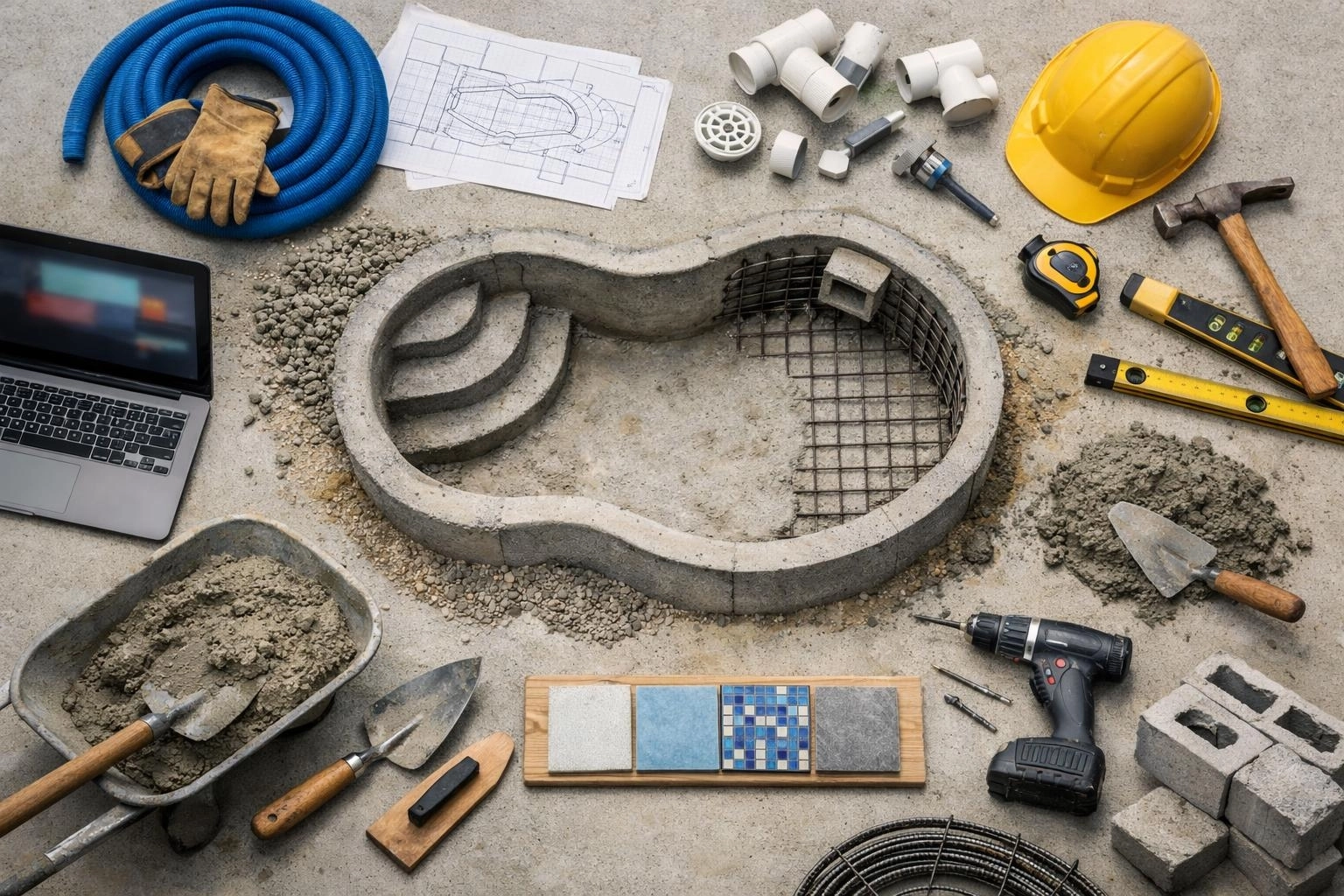
In this type of residential pool building, crews start with pool excavation. They set a rebar cage for rebar reinforcement, then apply gunite or shotcrete to form the shell. After plumbing rough-in and electrical rough-in, the surface gets coping and a plaster finish. The result is a strong structure with high structural integrity.
For Sandy Springs homes, the value is flexibility. Tree-heavy, established residential lots often limit access and complicate grading. A custom concrete pool can be shaped to fit the yard instead of forcing the yard to fit the pool. That makes it a smart option for landscape integration on both flat and sloped properties.
Homeowners need both pool construction and concrete pool services when a project includes excavation, shell building, decking, drainage, or structural repair. In Sandy Springs, this often applies to custom backyard builds, aging pool replacements, and upgrades that must tie into existing patios and landscape grading.
- New pool installation with a pool deck, patio, and landscaping that must all connect cleanly.
- Pool renovation projects where the shell needs repair, resurfacing, or structural updates before a new finish goes in.
- Hardscape integration jobs that add retaining walls, steps, or seating areas around the waterline.
- Backyard projects that need site grading to manage slopes, runoff, and safe access to the build area.
- Repairs where the existing pool, deck, and drainage system must be coordinated as one outdoor living system.
Common Project Situations That Need Both Services
- Backyard remodeling that changes the yard layout and requires new excavation and concrete work.
- Pool resurfacing after the shell is sound but the interior finish has worn out.
- Projects with retaining walls needed to hold grade and support the new pool shape.
- Sites that need site grading before plumbing, decking, and finish work can move ahead.
A concrete pool build usually follows a clear sequence. It starts with design planning and permitting, then moves to excavation, steel reinforcement, plumbing and electrical rough-in, concrete shell application, curing, tile and coping, plaster finish, and final startup. Each step affects durability, water-tightness, and the quality of the finished pool.
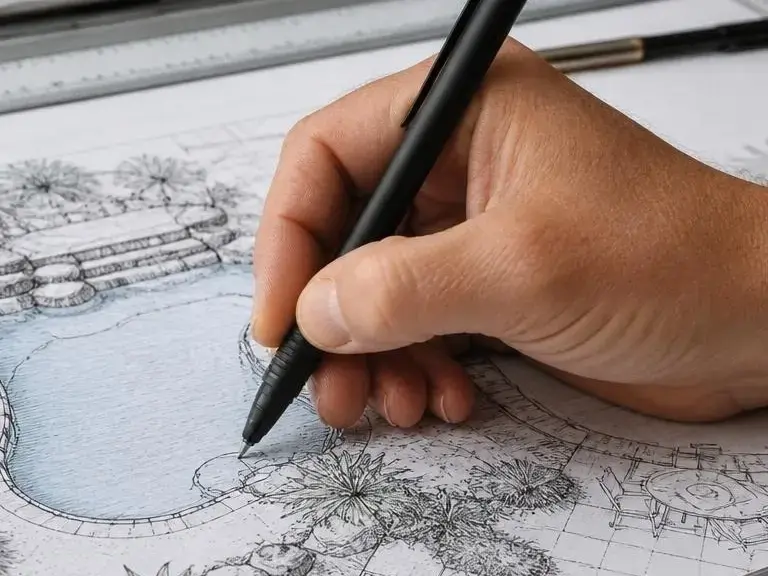
- Design approval confirms the layout, dimensions, features, and how the pool fits the lot.
- Permitting prepares the project for local review and helps ensure the plan matches Sandy Springs requirements.
- Excavation shapes the yard and creates the space for the shell and surrounding work.
- Rebar is formed into a steel cage that strengthens the shell and supports structural integrity.
- Plumbing and electrical rough-ins are set before concrete is applied, so equipment, lights, and circulation are in place.
- Gunite or shotcrete is sprayed to create the reinforced concrete shell, followed by proper cure time.
- Tile, coping, and equipment finishes are installed before the plaster finish creates the final interior surface.
- Startup, balancing, and inspection complete the build so the pool is ready for use.
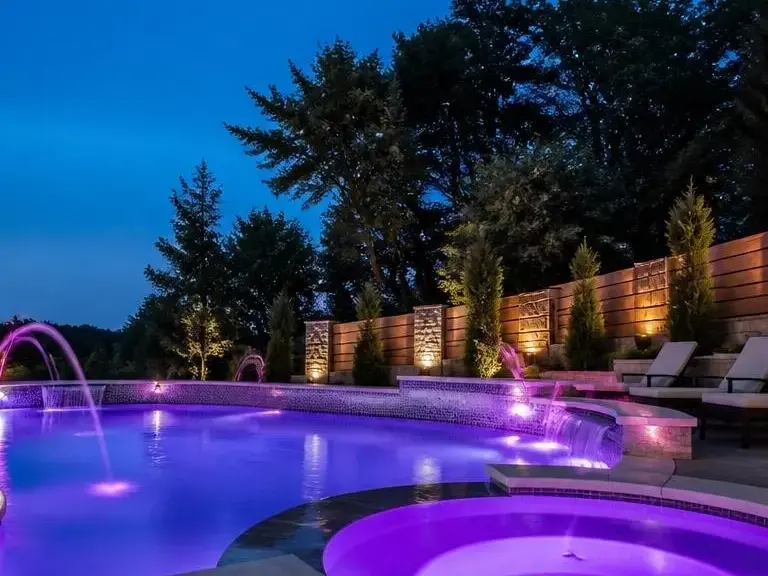
Concrete construction works best for custom pool features that need structural flexibility. That includes spas, tanning ledges, waterfalls, integrated lighting, and non-rectangular shapes. Because the shell is built on-site, Sandy Springs homeowners can tailor the pool to the yard, lifestyle, and design style.
| Feature | Why concrete works well | Common homeowner benefit |
|---|---|---|
| Waterfalls | The shell can support the weight and shape of built-in water features. | Adds movement, sound, and a more resort-like backyard feel. |
| Spa integration | The structure can connect the pool and spa into one system. | Creates a flexible layout for year-round use. |
| Sun shelf | A shallow ledge can be formed into the shell before finishing. | Gives a spot for lounging, children, or in-water seating. |
| Custom shapes | The on-site build allows curves, angles, and unique layouts. | Helps the pool match the yard instead of a standard template. |
| Lighting | Fixtures can be built into the structure during construction. | Improves nighttime use and overall outdoor living design. |
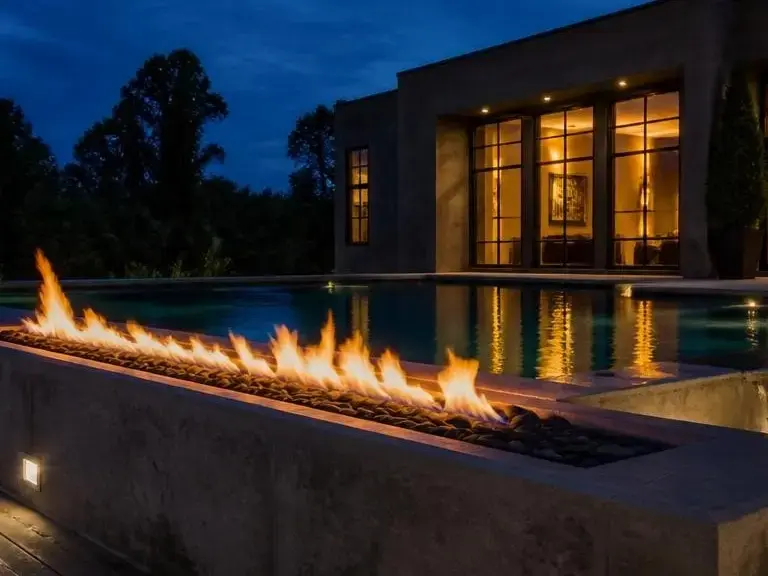
Popular choices include a custom-shaped pool, a vanishing edge pool, or a spa-integrated pool that blends with nearby patio space. Add-on features like coping detail, landscape integration, and low-voltage lighting help the project feel complete.
Permits, drainage, and soil conditions are critical in Sandy Springs because pool projects must account for local grading, runoff control, and site access. A proper plan reduces settling, protects surrounding hardscape, and helps the pool fit safely with the property’s existing landscape and elevations.
Local stormwater and slope management concerns can affect how the excavation is staged and where water moves after heavy rain. On some lots, the builder must coordinate drainage with grading, the pool deck, and nearby landscaping so runoff does not collect around the shell or undermine the patio. This matters even more on projects that connect to existing hardscape or mature trees.
In Sandy Springs, tree-heavy, established residential lots often make excavation and access more complex. That means the builder may need tighter equipment planning, more careful site grading, and a smarter route for soil removal. North Metro Atlanta heat and long swim seasons also make durable, low-maintenance concrete pools attractive for homeowners who want outdoor living use that lasts beyond one short season.
The right concrete pool builder has local experience, clear project sequencing, strong communication, and a portfolio of custom in-ground pools. Sandy Springs homeowners should choose a contractor who can manage excavation, structural work, finishing, and coordination with other outdoor living trades.
Look for a licensed contractor with a strong portfolio of residential pool building work, plus clear project management from design through startup. A dependable team explains the schedule, keeps communication steady, and backs the work with a written warranty. That matters when the job includes shell work, decking, drainage, and landscape coordination.
It also helps when the builder understands how pool decking, patio transitions, and surrounding outdoor spaces affect the final result. If a contractor can show clean finishes, good timing, and thoughtful coordination with other trades, that is usually a strong sign they can deliver a durable concrete pool installation that fits the property.
Frequently Asked Questions
Related Resources
Pool Construction Preparation Checklist
pool construction checklist
Everything About ItInground Pool Builder: Everything You Need to Know
inground pool builder
Everything About ItGunite, Fiberglass, and Concrete Pools: Which One Is Right for You?
gunite vs fiberglass vs concrete pools
What It CostsPool building cost in Sandy Springs, GA
pool building cost