Pool Construction Stages in Sandy Springs, GA
Pool construction follows a clear sequence: design and planning, permits, excavation, plumbing and steel, gunite or shell installation, curing, decking, tile, equipment setup, and final startup. In Sandy Springs, GA, the process also needs local site prep for clay soil, drainage, and permit coordination. A well-managed pool construction process protects the schedule, cuts down on rework, and helps deliver a safer pool that lasts longer.
What Are the Stages of Pool Construction?
Pool construction stages begin with design phase and site planning, then move through the permit phase, excavation, steel and plumbing, shell installation, curing, finishes, equipment setup, and final startup phase. Each stage depends on the one before it, so a well-sequenced build stays safer, meets code, and keeps the job on track.
In Sandy Springs, this sequence matters even more because clay-heavy soil can shift during excavation and drainage grading. A strong construction project plan cuts rework, keeps the inground pool lined up with the site plan, and helps the team clear each inspection step without avoidable delays.
Pool Construction Process Timeline in Sandy Springs
Pool construction process timeline varies by design, permit review, and weather, but most projects follow a similar pattern. Small pools move faster, average builds take longer because of site work and inspections, and large custom pool projects need the most coordination. In Sandy Springs, rain, clay soil, and inspection timing can stretch the calendar.
| Project size | Typical duration | What affects the pace |
|---|---|---|
| Small pool build | Usually the shortest typical window | Simpler design, easier access, fewer finish details, and faster inspection cycles |
| Average pool build | Moderate timeline with several handoffs | Excavation, plumbing lines, steel, shell curing, decking, and permit coordination |
| Large custom pool | Longest typical schedule | Complex engineering, more finish choices, heavier equipment setup, and more inspections |
Weather delays matter too. Spring and summer rain in metro Atlanta can slow excavation, shell work, and decking pours, especially when the site needs drainage correction. Good pool builder coordination helps the schedule recover faster after a rain day or an inspection hold.
What Details Matter During Pool Construction?
Pool construction details matter because they shape how durable, efficient, and easy to maintain the finished pool will be. The most important details include soil conditions, drainage, steel reinforcement, plumbing layout, equipment placement, and inspection checkpoints. In Sandy Springs, these details help the builder handle sloped lots, runoff, and heavy clay soil.
These details aren’t small extras; they shape the whole construction project. A careful site survey and the right pool builder coordination can prevent surprises in excavation, keep the pool installation process aligned with engineering, and reduce costly field changes later.
How Pool Construction Plans Are Prepared?
Pool construction plans turn your ideas into buildable drawings that show pool shape, depth, placement, equipment, utilities, and finish details. Good plans cut change orders, speed permit review, and help the pool builder coordinate excavation, plumbing, electrical, and finishes. In Sandy Springs, accurate plans matter even more for property setbacks and drainage.
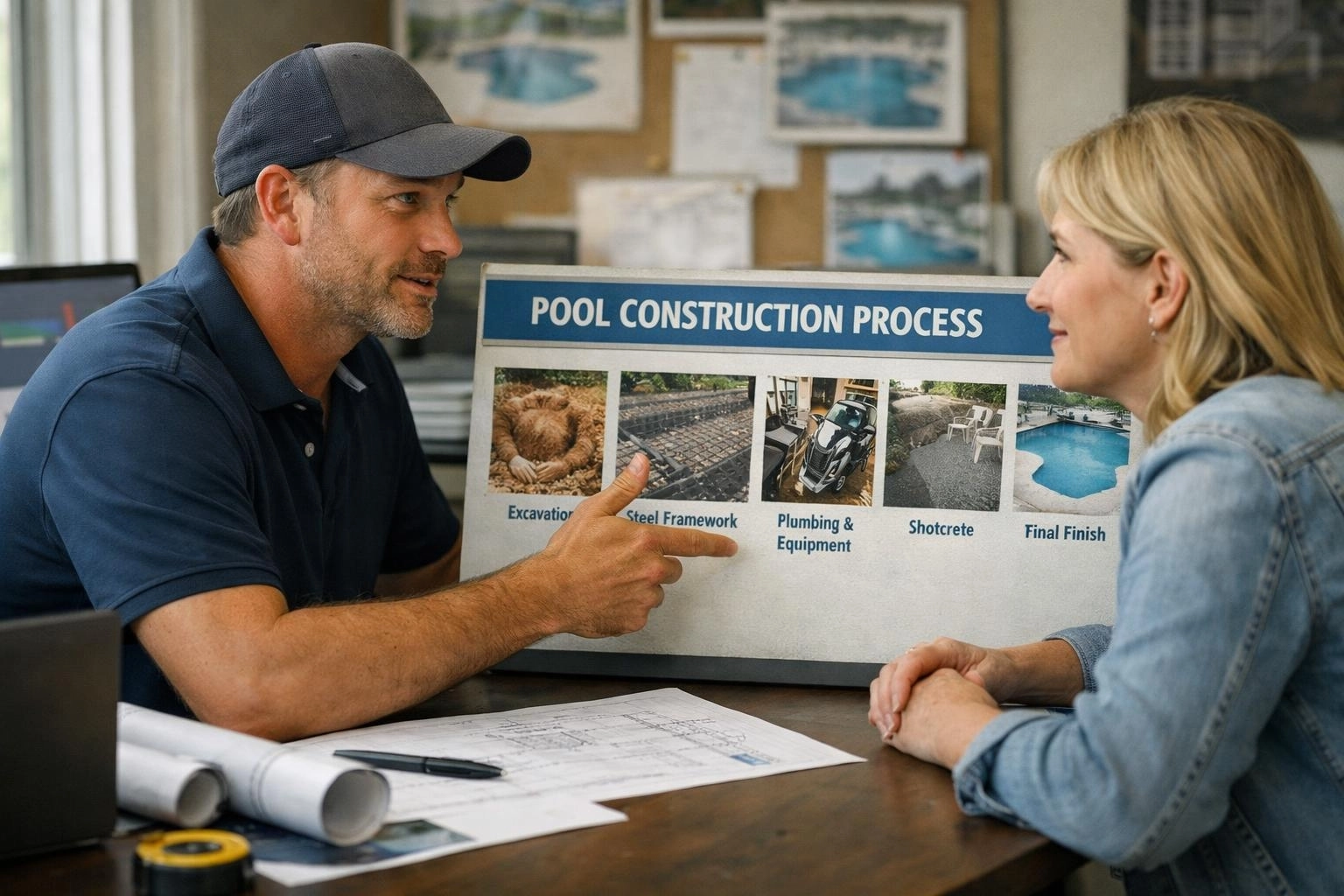
The process usually starts with a site survey so the designer can map grades, access points, and utility locations. From there, pool design plans are developed with engineering input where needed, especially for retaining conditions or complex layouts. The drawings should include utility layout, permit drawings, and a clear coping and decking plan so every trade knows what comes next.
Well-prepared plans also support the pool installation process by linking the design to the actual construction sequence. That means excavation, rebar placement, gunite, and finishing work can move in order instead of waiting on missing details. For homeowners, that usually means fewer delays, fewer surprises, and a cleaner path from concept to finished inground pool.
Which Pool Construction Types Are Available?
Pool construction types usually include gunite or shotcrete, fiberglass, and vinyl liner systems, with inground pool construction being the most common residential choice for custom builds. Each type differs in cost, customization, durability, and installation speed. Sandy Springs homeowners often compare these options based on lot conditions, long-term maintenance, and design goals.
A gunite pool or shotcrete pool is built on site and shaped for custom features, which makes it a strong fit for unique backyards and sloped lots. A fiberglass pool arrives as a preformed shell and can shorten the schedule if access allows. A vinyl liner pool can offer a different budget path, though the liner will need replacement over time. Each inground pool option has tradeoffs, so the best choice depends on the site survey, engineering needs, and how the homeowner wants the backyard to function.
For many homes, the deciding factor is not just the shell type but how well the system matches local site conditions and the rest of the construction project. Clay soil, drainage grading, and equipment access can make one pool build easier than another, even when the design looks similar on paper.
What Makes a Smooth Pool Build in Sandy Springs?
A smooth pool build in Sandy Springs depends on early permit coordination, realistic scheduling, and a site plan that accounts for backyard access, drainage, and weather. Builders who plan for clay soil, rainfall, and inspection timing can cut delays and avoid costly field changes during construction.
When these pieces line up, the pool builder can keep the construction project moving with fewer pauses. That kind of planning matters just as much as the finish choices, because it affects whether the home improvement project feels controlled or chaotic.
Common Questions About Pool Construction
Homeowners usually want to know how disruptive pool construction will be, how inspections work, and what happens if weather interrupts the build. Clear communication from the pool builder helps set expectations and keeps the project moving through each stage without unnecessary surprises.
If weather slows the schedule, the builder may need to resequence tasks or wait for better conditions before moving ahead. That’s common in a construction project, and it’s one reason communication matters from day one.
Frequently Asked Questions
Related Resources
Pool Installation Checklist for Sandy Springs Homeowners
pool installation checklist
What's RequiredPool Construction Preparation Checklist
pool construction checklist
What Goes With ItConcrete Pool Construction
Everything About ItPool Builder vs Custom Pool Builder: What’s the Difference?
pool builder vs custom pool builder