Pool Renovation Cost in Sandy Springs, GA
Pool renovation cost in Sandy Springs, GA usually depends on the pool’s surface area, condition, and finish choice, not gallons. For resurfacing, Google’s current consensus indicates many small plaster jobs start around $10,000, while larger or more detailed remodels cost more. In Sandy Springs, weather wear, aging finishes, and hard-to-reach areas can raise labor and material needs. SandySpringsPoolCompany.com can help you compare renovation options and get a local estimate.
What Does Pool Renovation Cost in Sandy Springs, GA?
Pool renovation cost in Sandy Springs, GA varies by project scope, surface area, finish selection, and site conditions. Homeowners usually pay more for full remodeling than for basic repairs, and local labor, material access, and aging pool surfaces can push totals higher.
For most homes, the biggest cost driver is the size of the shell and how much surface preparation is needed before new materials go on. A simple pool remodeling job may focus on the visible finish, while a larger home improvement cost guide can include shell repair, tile, coping, decking, and even equipment updates. That wider scope raises labor costs and material costs fast.
In Sandy Springs, GA, long humid summers and warm-season use can wear down plaster, tile, and sealants sooner than many owners expect. Older neighborhood pools often sit under tree cover, which can mean staining, debris, and extra cleanup before work starts. Local contractor quote details also matter because tight backyard layouts and access limits can make staging more complex, So two similar-looking pools can have very different totals based on condition and layout.
Think of this as a pool maintenance and repair decision, not just a cosmetic one. The pool shell, the finish coat, and the surrounding deck all affect pricing. A contractor who inspects the whole system can separate a small cosmetic fix from a broader pool renovation and help you avoid paying for work you do not need.
Pool Resurfacing Cost vs. Full Pool Remodeling
Pool resurfacing cost is typically lower than full pool remodeling because resurfacing focuses on the shell finish, while remodeling can include tile, coping, decking, plumbing, and equipment. Refinishing a pool is often used as a synonym for resurfacing and usually costs less than a complete renovation.
Pool resurfacing is the most common entry point when the surface is rough, stained, or worn but the structure is still sound. Pool refinishing usually means the same type of work: removing the old layer, doing finish preparation, and applying a new coat such as plaster. That makes it a narrower project than a cosmetic pool remodel or a full pool renovation.
Full remodeling goes farther. It may change the waterline tile, replace coping, rework decking, or repair plumbing and lighting. Those upgrades raise project scope and can extend the schedule. In a metro-area city, permit and contractor coordination can also affect timing, especially when multiple trades are involved.
If your goal is to restore a safe, clean-looking pool with limited disruption, resurfacing is often the better value. If the pool has outdated materials, cracked deck edges, or failing features, a broader remodel may make more sense even though the initial pool remodel cost is higher.
Typical Price Tiers for Pool Renovation Projects
Pool renovation pricing usually falls into basic, standard, and premium tiers based on finish quality and scope. Basic projects often cover resurfacing only, standard projects add select upgrades, and premium projects include broader remodeling work, custom materials, and more complex labor.
| Tier | Typical Scope | Typical Price Range |
|---|---|---|
| Basic | Plaster resurfacing, limited repairs, simple plaster finish, standard prep | About $10,000 to $18,000 |
| Standard | Resurfacing plus some tile, coping, minor decking touch-ups, more prep | About $18,000 to $35,000 |
| Premium | Full pool renovation, major shell repair, decking and coping changes, custom finishes | About $35,000 and up |
These ranges are typical, not fixed bids. The final number depends on surface area, access, finish type, and whether the project needs shell repair before the new finish can go on. A larger shell or more detailed remodel can move a job into a higher tier even if the pool itself is not very deep.
What Is the Cheapest Way to Resurface a Pool?
The cheapest way to resurface a pool is usually to choose the simplest acceptable finish, limit add-on upgrades, and keep the project focused on resurfacing instead of full remodeling. Cost also depends on whether the existing shell needs major prep, repairs, or structural corrections before the new finish can be applied.
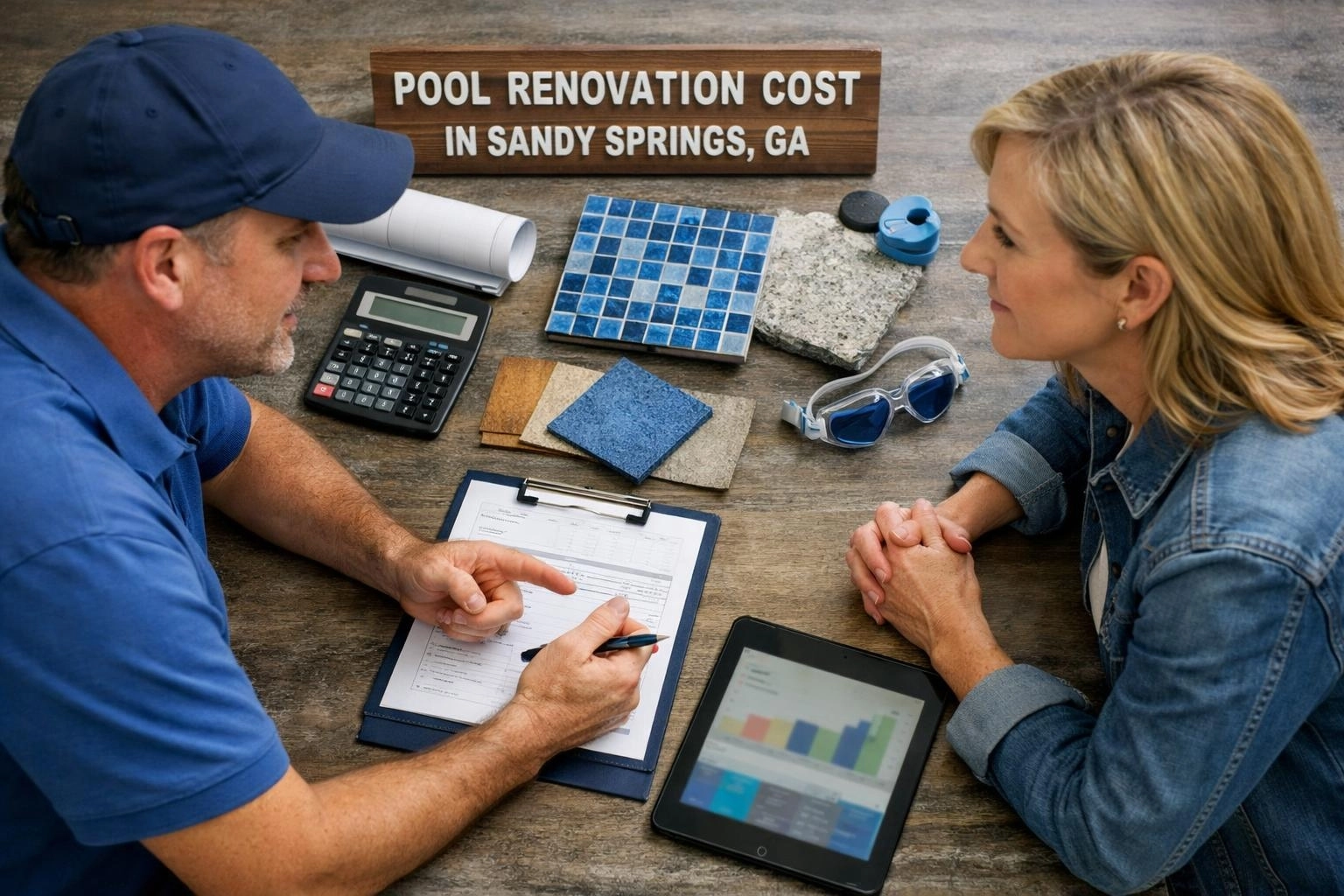
The main savings come from limiting labor, materials, and change orders. If the shell is in decent shape, a basic pool resurfacing cost plan is often the most budget-friendly route. If the old finish is failing in multiple places, though, skipping needed prep can backfire and raise the total later.
How Much to Resurface a 10,000 Gallon Pool?
How much to resurface a 10,000 gallon pool? Expect to pay based on surface area, not gallons. Most small pool jobs start around $10,000 for plaster. In Sandy Springs, the final price can rise if access is tight, the shell needs repairs, or the existing surface requires extra prep.
A 10,000 gallon pool can still have a surprising amount of surface area, so the water volume does not tell you the whole story. The shape, depth changes, steps, benches, and wall length all affect the amount of plaster and labor needed. That is why contractors price resurfacing by the shell, not by the gallon count.
For a smaller pool, a basic plaster job may be the most affordable option if the structure is sound. If the finish is heavily stained, the surface is rough, or the pool needs shell repair, the total can climb quickly. In neighborhoods with mature trees and older backyards, debris and access limits may add more staging time and cleanup.
So the best estimate comes from measuring the actual surface area and reviewing the pool’s condition in person. That gives you a clearer sense of whether the work is a simple resurfacing or a larger renovation that includes tile, coping, or decking changes.
Money-Saving Tips for Sandy Springs Pool Owners
Sandy Springs pool owners can reduce renovation cost by comparing scope carefully, choosing durable but straightforward finishes, bundling needed repairs, and scheduling work before small surface problems spread. A local contractor can also spot hidden prep issues early so you avoid change orders during the job.
Local conditions matter here. Warm weather, humid summers, and tree cover can shorten the life of pool finishes, so waiting often makes the job more expensive. A nearby contractor can also understand backyard layout limits and metro-area scheduling, which helps keep the project moving.
When to Get a Local Pool Renovation Estimate?
You should get a local estimate when the pool shows staining, rough texture, cracking, leaks, or outdated finishes. A Sandy Springs contractor can inspect the surface, measure the project properly, and separate resurfacing from full renovation so you know what is necessary before you commit.
Requesting an estimate early helps you catch hidden scope issues such as weak spots in the pool shell, worn coping, or failing deck edges. It also gives you a chance to compare a basic resurfacing quote with a broader remodel quote before the damage spreads.
For older pools, especially those shaded by trees or exposed to long humid summers, a site visit is the best way to judge true condition. That is where a local contractor quote becomes more useful than a generic online range. SandySpringsPoolCompany.com can help you review options and narrow the right scope for your pool.
Frequently Asked Questions
Related Resources
Pool Renovation Checklist Before You Remodel
pool renovation checklist
What Goes With ItPool Renovation and Remodeling
Everything About ItPool Renovation and Pool Remodeling: Complete Guide
pool renovation and remodeling
How It WorksCan you remodel an existing pool?
can you remodel an existing pool