Red Flags When Hiring a Swimming Pool Contractor in Sandy Springs, GA
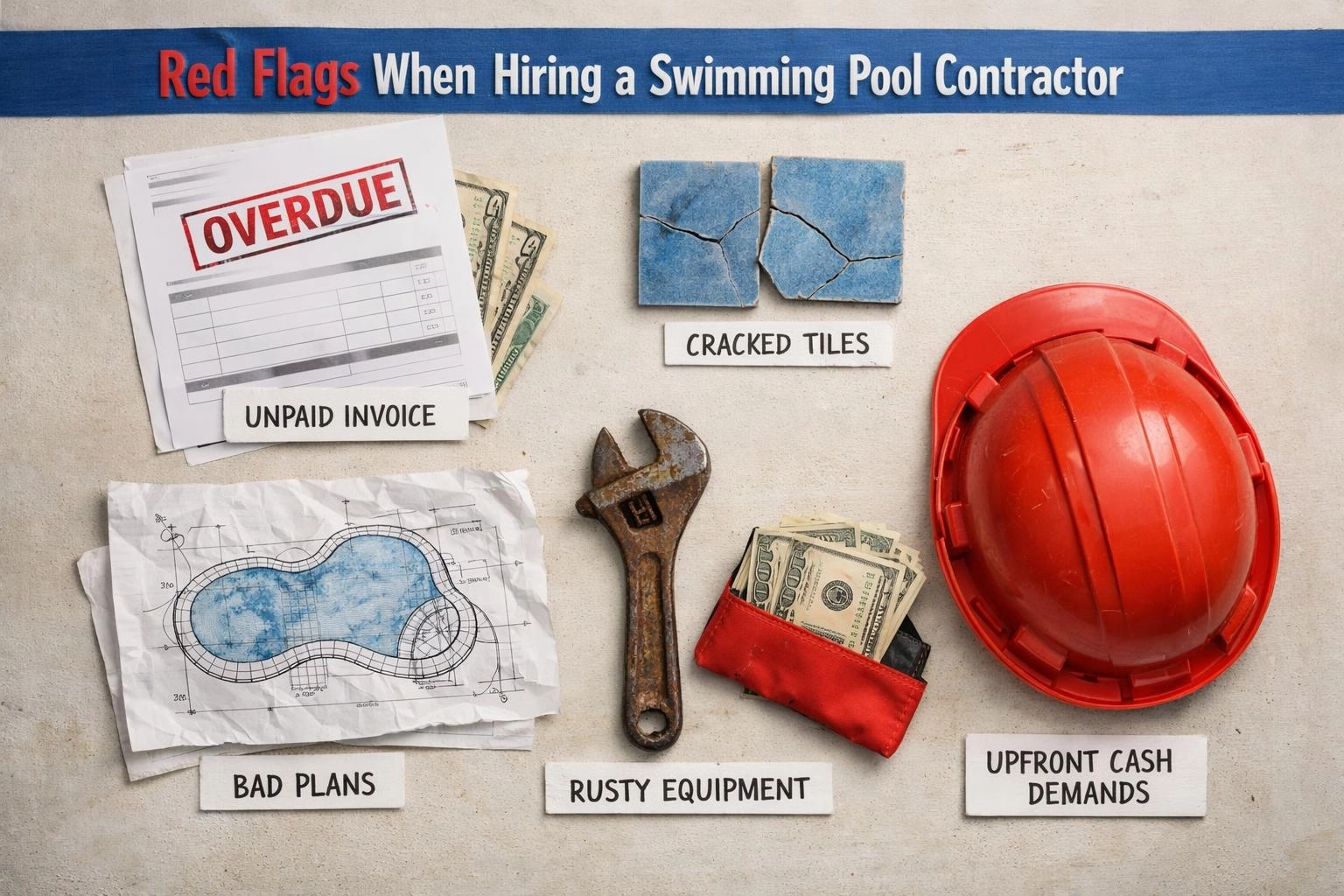
Common red flags when hiring a swimming pool contractor include missing license and insurance proof, vague bids, pressure to pay upfront, poor communication, no local references, and contracts that skip scope, timeline, or warranty details. In Sandy Springs, GA, you should also watch for contractors unfamiliar with local permits, drainage, and soil conditions. The safest choice is a licensed, insured pool builder with clear paperwork, responsive service, and verified local experience.
What Are the Most Common Red Flags When Hiring a Swimming Pool Contractor?
Common red flags when hiring a swimming pool contractor include no license, no insurance, vague estimates, high-pressure sales, and weak local references. A trustworthy pool builder gives you a written scope, permit guidance, timeline expectations, and proof of coverage before asking for a deposit.
Start with a simple checklist. A legitimate Home Services contractor should explain license verification, show a written estimate, and outline the scope of work in plain language. If the pool construction company keeps changing details when you ask questions, that is a warning sign. Good builders also discuss permit handling, code compliance, and the project timeline before any excavation begins.
For Sandy Springs homeowners, the best protection is simple: compare the written estimate, ask who handles permits, and make sure the pool builder can explain inspection steps without guessing. A solid swimming pool contractor will welcome those questions.
Why Do No License and No Insurance Proofs Matter?
No license and no insurance proof are major warning signs because they shift project risk to the homeowner. A qualified swimming pool contractor should show active licensing, workers’ compensation, and general liability coverage, plus explain who pulls permits and who is responsible for code compliance.
Think of the pool builders license and swimming pool contractor license as basic proof that the builder can legally manage the job. Insurance matters just as much. Without swimming pool contractor insurance, a claim from damage, injury, or faulty work can become your problem. Good builders also explain whether they handle permit documents, inspection scheduling, and repair warranty support.
What Not to Tell Your Contractor Before You Verify Them?
Do not reveal your maximum budget, urgency, or full decision deadline before you verify the contractor. Sharing too much too early can invite inflated pricing, pressure tactics, or shortcuts. Keep conversations focused on scope, materials, timeline, permit handling, and written references until credentials are confirmed.
A careful homeowner stays focused on facts first. If the pool builder stays professional, answers clearly, and does not push for fast money, that is a better sign than a flashy promise.
Use This DIY vs Professional Comparison Before You Hire
A DIY-style approach may seem cheaper at first, but professional pool construction lowers risk by handling permits, excavation, drainage, structural work, and warranty support. For Sandy Springs homeowners, a professional builder is the safer option when the project involves grading, utilities, or long-term code compliance.
This comparison helps you judge project risk, not just price. A professional pool builder handles the parts most homeowners cannot easily fix later, including inspection steps, structural details, and warranty follow-up.
| Factor | DIY | Professional |
|---|---|---|
| Permits | You must research permit rules, submit paperwork, and manage inspection timing. | The builder handles permit handling and helps keep the job aligned with local requirements. |
| Excavation and grading | Mistakes can lead to poor site grading, uneven settling, and drainage issues. | A professional pool builder manages excavation, slope, and drainage planning. |
| Code compliance | You are responsible for learning the rules and fixing errors if something fails inspection. | The contractor works toward code compliance and coordinates corrections if needed. |
| Warranty | Warranty support may be limited or impossible if you self-manage the build. | A reputable builder usually provides a clear warranty for covered work. |
| Overall risk | Higher risk for hidden damage, delays, and rework. | Lower risk because licensing, insurance, and trade coordination are built in. |
Most pool projects are not simple weekend jobs. When utilities, structural work, or long-term liability are involved, the safer choice is usually the experienced specialty construction professional.
How Do Pool Builders Licenses, Permits, and Insurance Protect Sandy Springs Homeowners?
Pool builder licensing, permits, and insurance protect Sandy Springs homeowners by reducing fraud, liability, and inspection failures. When a contractor is local and legitimate, they can coordinate city requirements, carry the right coverage, and document the work so the pool project is safer and easier to verify.
These protections matter even more in Sandy Springs, GA, where a project can stall if the builder does not understand local permits or inspection steps. Good contractors know how to coordinate paperwork, schedule inspections, and keep the build moving without cutting corners. That matters for Home Services jobs that involve excavation, drainage, and utility coordination.
Local experience also helps the contractor spot site grading issues before they become expensive repairs. North Georgia rainfall can expose poor drainage fast, and a pool construction company that ignores slope, runoff, or soil behavior may leave you with pooling water or erosion around the shell. The right builder uses licensing, insurance, and permit discipline to reduce those risks from the start.
What Should a Local Pool Builder Be Able to Show You?
A local pool builder should be able to show a written contract, recent Sandy Springs-area references, proof of insurance, a project portfolio, and a clear permit process. If they cannot explain past work or avoid documentation, that is a strong sign to keep shopping for a different contractor.
- A complete written contract that lists the scope of work, materials, and payment stages.
- Recent local references from homeowners who had similar projects.
- Proof of insurance showing liability coverage and workers’ compensation.
- A portfolio with photos that match the type of pool you want.
- A clear explanation of permit history, inspection steps, and who files the permit documents.
If a contractor cannot show these basics, treat that as a serious warning sign. Good builders near me do not hide the paperwork.
Which Sandy Springs Conditions Make Contractor Vetting More Important?
Sandy Springs conditions make contractor vetting more important because site grading, drainage, and permit coordination can affect pool quality and longevity. A contractor who understands local lot conditions, seasonal scheduling pressure, and inspection steps is less likely to create delays, cost overruns, or structural problems.
Neighborhood lot conditions in Sandy Springs, GA can make access, excavation, and equipment staging tighter than expected. A pool builder who has worked in the area will know how to plan around narrow drives, limited yard access, and tight staging space so the job does not damage landscaping or create avoidable delays. That is one reason pool builders near me should be judged on local experience, not just ad copy.
Seasonal demand is another issue. Spring and summer pressure in Metro Atlanta can lead to rushed scheduling, weak communication, and fast-talking sales tactics. The best pool construction company will still provide a clear project timeline, explain expected inspection steps, and document any changes in the written contract. In this climate, the safest hire is the one that shows patience, clear planning, and strong local references.
Frequently Asked Questions
Related Resources
Pool Installation Checklist for Sandy Springs Homeowners
pool installation checklist
What's RequiredPool Construction Preparation Checklist
pool construction checklist
What's RequiredPool Opening Checklist for Spring and Summer
pool opening checklist
What Goes With ItConcrete Pool Construction